
Airppb
Global gas demand is rising again, increasing the need for reliable control and distribution equipment. The International Energy Agency’s Gas 2024 report forecast demand growth of about 2.5% in 2024, or roughly 100 billion cubic metres. This is useful context, not proof of growth in any single equipment category. A Dynamic Gas Distribution Device must still be judged by its actual performance, intended gas, and operating conditions.
For buyers asking, “China Top Dynamic Gas Distribution Device Supplier?”, a shortlist should begin with evidence, not rankings. Review flow range, pressure stability, response time, wetted materials, connection options, and documented leak and calibration tests. Ask for current product data sheets and traceable test records. Check whether technical support can address installation and maintenance questions. Small details matter. A drifting reading on a test bench can become costly downtime in a production line. Supplier claims deserve careful checking; I would not treat a polished catalogue as independent proof. The IEA report describes a broad energy trend, not product quality or supplier standing. Comparing manufacturers against the same application requirements is more dependable than relying on a “top supplier” label. Some specifications may look impressive on paper. Their value depends on the conditions in which the device will operate.
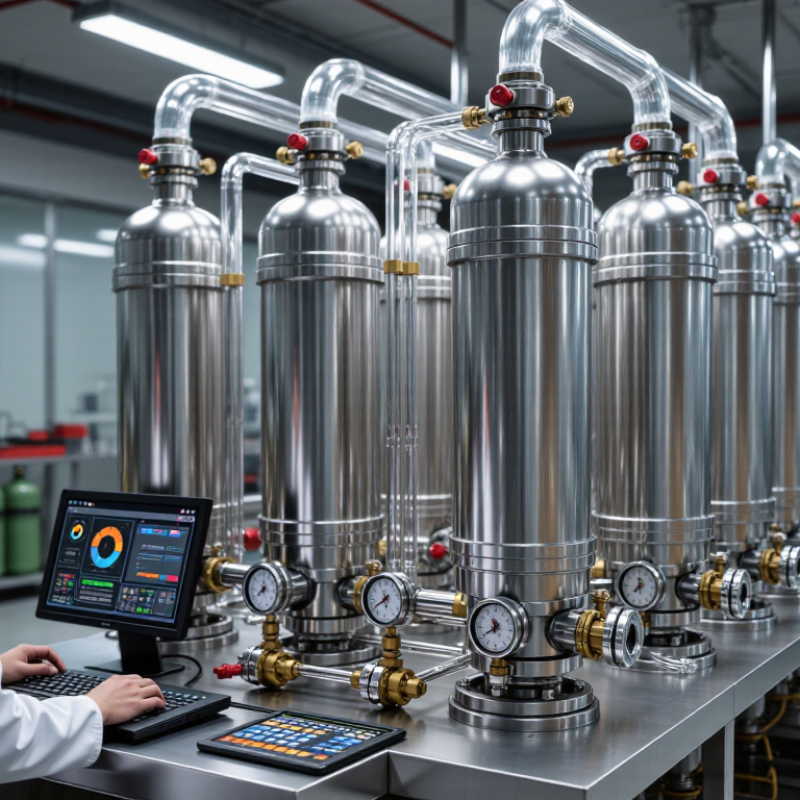
A dynamic gas distribution device meters and routes gases while a process is running. It may combine flow controllers, valves, pressure regulators, sensors, and a control unit. Operators set a target flow or blend; sensors track changing conditions, and the controller adjusts valves accordingly. In a laboratory cabinet, this can mean feeding two gases through separate lines and maintaining a chosen ratio at an instrument inlet. The device does not simply split a fixed supply. It actively responds.
Performance depends on gas properties, pressure, temperature, and calibration. A controller calibrated for one gas may give inaccurate readings with another. ISO 6145-7 describes dynamic preparation of gas mixtures using thermal mass-flow controllers, providing a technical basis for this approach. Check the calibration gas, operating range, leak integrity, and response time before use. Small errors matter.
The need for dependable flow control is growing in hydrogen-related process development. The IEA’s Global Hydrogen Review 2024 reports that installed electrolyser capacity reached about 1.4 GW by the end of 2023, while announced projects could exceed 520 GW by 2030. These figures describe electrolyser projects, not gas-device demand; many announced projects may not proceed. Still, they show why precise gas handling deserves attention. Real systems are less tidy than diagrams, and a sensor can drift unnoticed. Regular verification remains essential.
How Dynamic Gas Distribution Devices Work
Dynamic gas distribution devices adjust flow as operating conditions change. A supply line feeds a manifold, which directs gas toward one or more outlets. Valves regulate each route. In many systems, flow sensors measure delivery and send readings to a controller. The controller compares actual flow with the requested setting, then adjusts the valves. Small changes can matter. A slight pressure shift may alter flow at a downstream outlet.
Some devices use mass flow controllers, while others rely on pressure regulators or timed valves. The right arrangement depends on the gas, target flow, pressure range, and response time. Gas-specific calibration is important; settings for one gas may not work accurately with another. During setup, technicians can check connections, compare readings with a calibrated reference, and watch for unstable flow. Real systems can be less tidy than diagrams. Sensors drift, and tubing adds resistance.
Tips: Keep tubing runs short and fittings secure. Record pressure and flow settings during testing. If readings fluctuate, check the supply and sensor calibration before changing several settings at once.
Example component flow rates for a 100 sccm dry-air mixture
A dynamic gas distribution device adjusts the flow of each gas stream to achieve a target mixture. This example applies approximate standard dry-air composition to a 100 sccm total flow; the values are calculated setpoints, not measurements from a specific device.
Dynamic gas distribution devices control how gases reach different points in an industrial process. Depending on the design, they can adjust flow rates, balance multiple outlets, and respond to changing demand. Operators may monitor pressure gauges and flow readings while checking that tubing connections remain secure. Small shifts matter.
In semiconductor production, stable gas delivery supports repeatable process conditions inside controlled equipment. Metal heat-treatment lines use regulated gas flows to maintain the intended furnace atmosphere. Chemical plants may distribute process gases to reactors, while food-packaging facilities use measured gas blends to help protect product quality. Each application needs compatible materials, suitable pressure ranges, and controls matched to the process.
Selection should reflect the gas properties, operating environment, and required flow accuracy. Engineers typically review sensor response, valve behavior, maintenance access, and alarm functions before installation. A device that works well at steady demand may respond differently during rapid changes. That is not always tidy. Real operating data and routine inspection can reveal issues that specifications alone may miss. Teams should verify performance under expected conditions and follow site procedures for handling and monitoring gases.
| Industrial Sector | Typical Applications | Commonly Controlled Gases | Important Control Requirements |
|---|---|---|---|
| Semiconductor and electronics manufacturing | Deposition, etching, chamber purging, and process-gas delivery | Nitrogen, argon, hydrogen, oxygen, and process-specific specialty gases | Accurate, repeatable flow control; compatible wetted materials; leak prevention; and integration with gas cabinets or process tools |
| Pharmaceutical and biotechnology | Fermentation aeration, bioreactor gas supply, equipment purging, and packaging operations | Air, oxygen, nitrogen, and carbon dioxide | Stable flow, cleanable or suitable gas-contact components, documented operating conditions, and appropriate monitoring |
| Chemical and petrochemical processing | Reactor feed, inerting, gas blending, and pilot-plant testing | Nitrogen, hydrogen, oxygen, carbon dioxide, and process-specific gases | Materials compatible with the gas and operating conditions; reliable control across the required flow range; and suitable pressure and safety provisions |
| Energy and power | Fuel-gas testing, combustion research, gas blending, and laboratory-scale energy processes | Natural gas, hydrogen, air, oxygen, and nitrogen | Repeatable flow settings, appropriate gas detection and ventilation, and equipment selected for the applicable pressure and hazard classification |
| Food and beverage | Modified-atmosphere packaging, carbonation, and inert-gas blanketing | Carbon dioxide, nitrogen, and oxygen | Consistent gas ratios, food-contact suitability where applicable, and dependable operation during production cycles |
| Metals and materials processing | Furnace atmospheres, heat treatment, welding, and materials research | Argon, nitrogen, hydrogen, oxygen, and forming gases | Stable delivery, gas compatibility, suitable flow capacity, and safeguards for flammable or oxygen-enriched service |
| Environmental testing and analytical laboratories | Calibration-gas delivery, instrument carrier gases, emissions testing, and controlled-atmosphere experiments | Helium, nitrogen, argon, hydrogen, and certified calibration mixtures | Repeatability, low-flow capability where needed, traceable calibration, and correct handling of the gas mixture |
Gas examples and requirements vary by process. Device selection should consider gas composition, flow and pressure range, materials compatibility, calibration needs, and applicable safety requirements.
China Top Dynamic Gas Distribution Device Supplier?
How to Evaluate Chinese Device Suppliers
A supplier’s website can look polished. Details matter. Ask for the device’s operating range, channel count, pressure stability, and response time, then compare these values with your process requirements. Request test data from a unit with a similar configuration. A generic performance chart may not reflect your setup.
Check how the supplier verifies calibration, leak tightness, and material compatibility. Ask for sample inspection records and traceable component information. If possible, review the assembly area and observe a factory acceptance test. Watch how operators document readings and handle a failed result. Small gaps can be revealing. I would not treat one visit or one sample as proof of consistent production; that judgment needs more evidence. Also discuss installation support, spare-part availability, and response times in writing. Clear answers are useful, but reliable records and repeatable test results carry more weight.
China Top Dynamic Gas Distribution Device Supplier?
Manufacturing Standards and Quality Assurance in China
For dynamic gas distribution devices, quality begins with controlled processes, not polished certificates. A mass-flow controller or valve assembly needs verified materials, stable calibration, and leak checks recorded against its serial number. ISO’s ISO Survey 2022 counted 1,265,216 valid ISO 9001 certificates worldwide. That figure shows how widely quality-management systems are used; it does not prove any individual product performs well. Numbers need context.
A capable manufacturer should document incoming-material inspection, calibration traceability, pressure testing, and final acceptance criteria. Test records should identify the instrument, its calibration status, the operator, and the result. ISO/IEC 17025 accreditation can support confidence in a testing laboratory’s competence, but buyers should confirm which tests fall within its accredited scope. Ask to see sample inspection records and how failed units are contained. Look for practical details: a capped gas port, a readable test label, and a pressure reading linked to a dated report. Audits can miss process drift. A gauge may pass one check and still be overdue for recalibration. The honest answer is not that defects never happen, but that deviations are recorded, investigated, and used to improve controls.
They support semiconductor equipment, heat-treatment furnaces, chemical reactors, and food-packaging lines. Each process needs compatible materials and steady gas delivery. Small shifts matter.
Depending on their design, they adjust flow rates, balance outlets, and respond to changing demand. Operators can check pressure gauges and flow readings during operation.
Match it to the gas properties, operating environment, pressure range, and required flow accuracy. Consider sensor response, valve behavior, maintenance access, and alarms.
A device that works at steady flow may react differently to rapid changes. Real operating data can reveal issues that specifications miss. Systems can be messier.
Ask for material inspection results, calibration traceability, pressure-test records, and final acceptance criteria. Records should identify the instrument, operator, date, and result.
It shows that a management system has been assessed. It does not prove that every individual device performs well. Numbers need context.
Check whether its accreditation covers the specific tests being performed. Request sample reports, including the instrument’s calibration status and recorded pressure reading.
The manufacturer should document the deviation, contain the affected unit, investigate the cause, and improve controls. Audits can miss process drift; one passed check is not everything.
A Dynamic Gas Distribution Device regulates the flow, pressure, and allocation of gas within a system. By coordinating control components with sensors and monitoring functions, it can help maintain stable delivery, respond to changing operating demands, and support efficient use of gas. These devices serve a range of industrial settings where consistent and carefully managed gas supply is important.
When evaluating suppliers in China, buyers can consider technical capabilities, product customization, material selection, testing procedures, and after-sales support. Clear documentation and consistent quality assurance are also essential. Reviewing manufacturing processes, inspection records, and applicable standards can help assess whether a supplier is equipped to deliver reliable devices that meet the project’s operating requirements.
