
Airppb Airppb

How to Choose a Chemical Poison Detector for Global Buyers?

Time:2026-10-13 Author:Mason
0%

Choosing a Chemical Poison Detector is a safety decision, not a simple equipment purchase. Global buyers must assess real workplace risks, operating conditions, and response procedures. A detector used near a chemical warehouse may face dust, humidity, solvent vapors, or poor lighting. These details can change measurement quality.

The need is substantial. The World Health Organization reported that selected chemical exposures caused approximately 2 million deaths and 53 million disability-adjusted life years in 2019. The United Nations Environment Programme’s Global Chemicals Outlook II also projects continued growth in chemical production and use. More chemicals mean more complex monitoring demands. Buyers should therefore compare detection limits, target substances, response time, calibration methods, sensor life, and data logging. Independent testing matters. So does local technical support.

Look beyond the sales brochure. A device may detect one vapor accurately but perform poorly in mixed atmospheres. Portable models should be tested with gloves, protective clothing, and limited visibility. Fixed systems need reliable alarms, routine maintenance, and clear integration with emergency plans. International buyers should review relevant performance standards and workplace requirements in their operating regions. The U.S. National Institute for Occupational Safety and Health and the International Electrotechnical Commission provide useful technical references, although neither replaces a site-specific risk assessment.

No instrument is perfect. That matters. Field experience often reveals weaknesses that laboratory demonstrations hide. A dependable Chemical Poison Detector should support trained workers, not encourage unsafe investigation. This guide explains how to compare detector technologies, verify supplier claims, and select practical equipment for responsible chemical safety management worldwide.
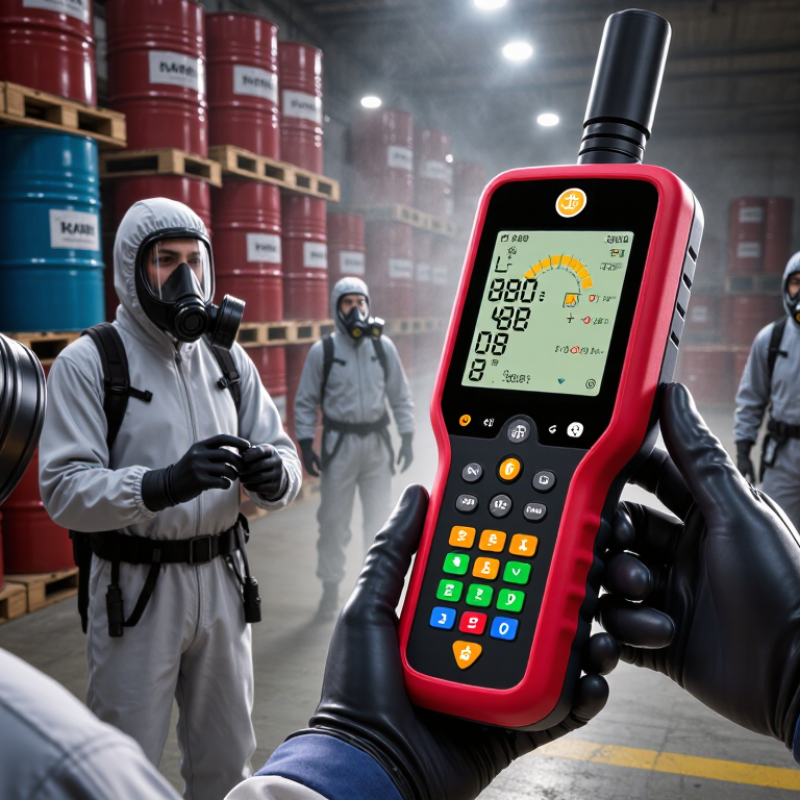
How to Choose a Chemical Poison Detector for Global Buyers?

Define the Detection Needs and Chemical Hazards to Be Monitored

How to Choose a Chemical Poison Detector for Global Buyers?

Define the Detection Needs and Chemical Hazards to Be Monitored

Choosing a chemical detector starts with the hazard, not the instrument. List every target chemical, possible mixture, concentration range, and exposure route. Vapors, liquids, and contaminated surfaces require different sampling methods. A detector for warehouse leaks may fail during confined-space entry. It may also respond poorly to humidity, dust, or temperature changes.

The WHO reported 2 million chemical-related deaths and 53 million lost healthy life-years in 2019. This finding shows why exposure limits and alarm thresholds must be defined before purchasing. The UNEP Global Chemicals Outlook II reported global chemical industry sales of US$5.7 trillion in 2017. It also projected continued growth through 2030. More chemical use means more varied monitoring conditions.

Tips: Build a hazard list from safety data sheets, workplace records, and local emergency plans. Separate routine screening from emergency identification. Check whether the detector measures a specific compound or only a chemical family. Confirm response time, detection limits, calibration needs, battery life, and cross-sensitivity data. Ask for independent test results, not only supplier claims. A readable display matters when workers wear gloves.

No detector is perfect. A strong signal can still be misleading. Dust, solvents, or cleaning agents may create false alarms. Field trials should happen in realistic rooms and weather conditions. Global buyers should document training, maintenance, language support, and replacement sensor access. Sometimes, a simpler device with disciplined procedures is safer than a sophisticated tool nobody trusts.

Compare Detector Technologies, Detection Ranges, and Accuracy

Global buyers should compare detection technology before comparing price. Electrochemical sensors suit gases such as chlorine or ammonia, with low power use and quick alarms. Photoionization detectors measure many volatile organic compounds, but humidity and compound response factors affect readings. Infrared instruments can identify several gases remotely, although interference and calibration remain concerns. Colorimetric tubes are simple and affordable, but they require manual sampling and produce less precise results.

Detection range must match the exposure risk. The NIOSH Pocket Guide lists an IDLH value of 10 ppm for chlorine and 300 ppm for ammonia. These figures show why one universal detector is unrealistic. A wide range may miss low-level leakage, while a very low range may saturate during an incident. Accuracy claims also need careful reading. Check the limit of detection, response time, cross-sensitivity, temperature limits, and calibration interval. EPA Method TO-15 demonstrates how laboratory air analysis can support portable screening, but field instruments should not be treated as laboratory replacements. That distinction is often ignored.

Tips: Ask for third-party test reports, traceable calibration records, and results from humid field conditions. Verify whether readings are compound-specific or estimated. Carry a second method when consequences are serious. No detector is perfect; even experienced teams can misread a drifting sensor.

How to Choose a Chemical Poison Detector for Global Buyers?

This comparison uses representative, manufacturer-independent performance bands for common detector technologies. Electrochemical sensors generally provide low-cost, selective monitoring for specific toxic gases; colorimetric tubes offer simple, disposable screening; photoionization detectors cover a broad VOC range but require compound-specific response factors; and ion mobility spectrometry can detect very low vapor concentrations but usually requires more specialized operation. Actual range and accuracy depend on the target chemical, calibration, temperature, humidity, and sampling method.

Evaluate Safety Standards, Certifications, and Environmental Suitability

Choosing a chemical poison detector requires more than comparing sensor ranges.

Check whether its safety certification matches the intended workplace. IECEx or ATEX documentation supports use in hazardous areas, while intrinsic-safety approvals address ignition risks. Ask for the certificate number, test scope, and approved gas list. Do not accept a generic “industrial grade” claim.

Environmental suitability matters just as much. Review operating temperature, humidity, dust exposure, corrosion, vibration, and enclosure protection. A detector used near a wastewater tank faces different conditions from one used in a laboratory. Sensor cross-sensitivity can also create false alarms. The WHO Global Air Quality Guidelines, published in 2021, emphasize that exposure limits depend on pollutant type and concentration. Therefore, select detection ranges against recognized occupational limits, not only marketing specifications. The ILO reported 2.93 million work-related deaths globally in 2023, reminding buyers that small maintenance failures can have serious consequences.

Tips: Request calibration records from an ISO/IEC 17025-accredited laboratory. Confirm bump-test procedures before purchase. Check battery performance in cold conditions. Replaceable sensors reduce downtime, but they still need scheduled calibration. Real sites are messier than brochures. A certificate is not proof of perfect field performance. Ask suppliers to provide test results under humidity, temperature, and interference conditions that resemble your facility.

Assess Usability, Maintenance, Calibration, and Data Management

How to Choose a Chemical Poison Detector for Global Buyers?

A suitable detector should be usable before it becomes urgent. Operators need clear alarms, readable screens, gloves-friendly buttons, and simple menus. Field teams often work in poor light, heat, dust, or noisy rooms. A complicated interface can delay action. Keep it simple. The UN Environment Programme’s Global Chemicals Outlook II projects chemical production could double by 2030. Wider chemical use increases the need for practical monitoring, not merely advanced specifications.

Maintenance deserves equal attention. Buyers should check battery life, sensor replacement intervals, filter costs, and local service access. A bump test before each shift can reveal blocked inlets or weak alarms. Calibration needs traceable reference materials and documented intervals. ISO/IEC 17025 provides a useful benchmark for competent calibration laboratories. WHO and ILO estimates published in 2021 linked work-related risks to 1.9 million deaths in 2016. This figure does not prove every detector prevents harm, but it supports disciplined exposure controls.

Data management is often overlooked. The detector should record timestamps, locations, alarm levels, user identity, and calibration status. Exported files need protection against accidental editing. NIST guidance on cybersecurity supports access control, audit records, and secure updates for connected devices. Data can drift. A perfect dashboard cannot repair poor sampling or missing maintenance notes. Buyers should test one complete workflow, from alarm to report, before purchasing large quantities. The weak point may be training, not hardware.

Select a Supplier Based on Support, Total Cost, and Global Compliance

How to Choose a Chemical Poison Detector for Global Buyers?

A reliable detector is more than a sensor and display. UNEP’s Global Chemicals Outlook II projects global chemical production will nearly double by 2030. More facilities therefore need faster, traceable workplace monitoring. WHO’s 2021 assessment linked selected chemical exposures with about two million deaths and 53 million disability-adjusted life years in 2019. These figures make supplier support a safety requirement, not a sales extra.

Ask about calibration intervals, replacement sensors, response times, and multilingual training. A low purchase price can become expensive after freight, customs, batteries, software, and annual calibration. Calculate the total cost over five years. Request service records and a clear spare-parts plan. ISO/IEC 17025-accredited calibration supports stronger measurement confidence, while documented testing for applicable electrical, electromagnetic, and workplace requirements supports global compliance. Requirements still vary by destination. I would not assume one certificate works everywhere.

Tips: Test the detector during a realistic eight-hour shift. Check readings near ventilation points, storage areas, and worker entry zones. Ask whether local technicians can respond within your operating window. Review data export formats before purchase. Cloud access sounds useful, but offline records may matter during network failures. One overlooked detail: translated alarms must remain technically accurate.burugburu

FAQS

How should buyers define their chemical detection needs?

List target chemicals, mixtures, concentration ranges, and exposure routes. Vapors, liquids, and contaminated surfaces need different sampling methods. Do not start with the device.

Can one detector monitor every chemical hazard?

Usually not. Some instruments detect specific compounds, while others estimate chemical families. A universal detector may miss low-level leaks or saturate during emergencies.

Which technologies suit different monitoring tasks?

Electrochemical sensors support gases such as chlorine and ammonia. Photoionization devices measure many volatile compounds. Infrared instruments can support remote gas checks. Colorimetric tubes are simple but less precise.

What detection range should a buyer choose?

Match the range to both routine exposure and emergency conditions. A low range may saturate during a release. A wide range may overlook a small leak. This choice deserves careful review.

How can buyers judge detector accuracy?

Check detection limits, response time, cross-sensitivity, temperature limits, and calibration intervals. Ask for independent test reports and traceable calibration records. Supplier claims alone are not enough.

Can humidity, dust, or cleaning products affect readings?

Yes. Humidity, dust, solvents, and cleaning agents can trigger false alarms or distort results. Test the device in realistic rooms, weather, and workplace conditions.

What practical features matter during field use?

A readable display helps workers wearing gloves. Check battery life, alarm volume, sensor replacement, calibration needs, and language support. A complicated tool may fail when nobody trusts it.

Should portable readings replace laboratory analysis?

No. Portable instruments support screening and rapid decisions. Laboratory methods can provide more detailed confirmation. Treating field readings as final proof may create false confidence.

When should teams use a second detection method?

Use a second method when consequences are serious or readings seem unusual. A strong signal can still mislead. Experienced teams can misread a drifting sensor, too.

What should global buyers include in a field trial?

Test leaks, low concentrations, humidity, dust, temperature changes, and confined spaces. Record training needs, maintenance tasks, alarm behavior, and replacement access. The trial may reveal uncomfortable weaknesses.

Conclusion

Choosing the right Chemical Poison Detector requires a clear understanding of the substances and hazards that need to be monitored. Global buyers should first define target chemicals, expected concentration ranges, response time, and operating environments. They can then compare detection technologies according to sensitivity, selectivity, detection limits, accuracy, and reliability. A suitable detector should also meet relevant safety standards and certifications while remaining dependable in challenging conditions such as high humidity, temperature changes, dust, or limited ventilation.

Usability and long-term management are equally important. Buyers should evaluate display design, alarms, battery life, maintenance requirements, calibration procedures, data storage, and reporting functions. Supplier selection should consider technical support, training, spare parts availability, delivery capability, total ownership cost, and compliance with applicable regulations in each destination market. By balancing performance, safety, practicality, and after-sales support, organizations can choose a dependable detection solution that supports responsible workplace protection and consistent monitoring across different regions.

Mason

Mason

Mason is a seasoned marketing professional with a deep expertise in the company's offerings and a passion for driving brand awareness. With a strong background in digital marketing strategies, he has an innate ability to connect with diverse audiences and effectively communicate product benefits.......