
Airppb
Phosgene Gas Detector technology helps identify a highly hazardous industrial gas before exposure becomes visible or obvious. Phosgene is colorless, and its odor may not provide a dependable warning. In a manufacturing area, a detector can monitor the air near process equipment, storage points, or ventilation outlets. A sudden alarm may be the first clear sign that conditions have changed.
Most detectors use an electrochemical sensor, infrared technology, or another gas-specific detection method. When phosgene reaches the sensing chamber, it creates a measurable chemical or optical response. The instrument converts that response into a concentration reading. If the level exceeds a programmed limit, it can activate an audible, visual, or remote alarm. Some systems also record readings, helping trained teams review exposure patterns and equipment performance.
Reliable detection depends on more than the sensor itself. Correct placement matters. Air movement, temperature, humidity, and nearby chemicals can influence results. Regular calibration with approved reference materials supports accurate readings. A detector should also be checked during routine inspections, not only after an alarm. Personal monitors may protect individual workers, while fixed systems can watch larger areas.
No detector is perfect. Sensor aging, blocked sampling paths, or poor maintenance can reduce confidence. This limitation deserves honest attention. Professional safety teams should combine monitoring with ventilation, access controls, emergency planning, and suitable protective procedures. This article explains how a Phosgene Gas Detector works, what its readings mean, and why practical testing remains essential. A number on a display is useful, but it is not the whole safety decision.
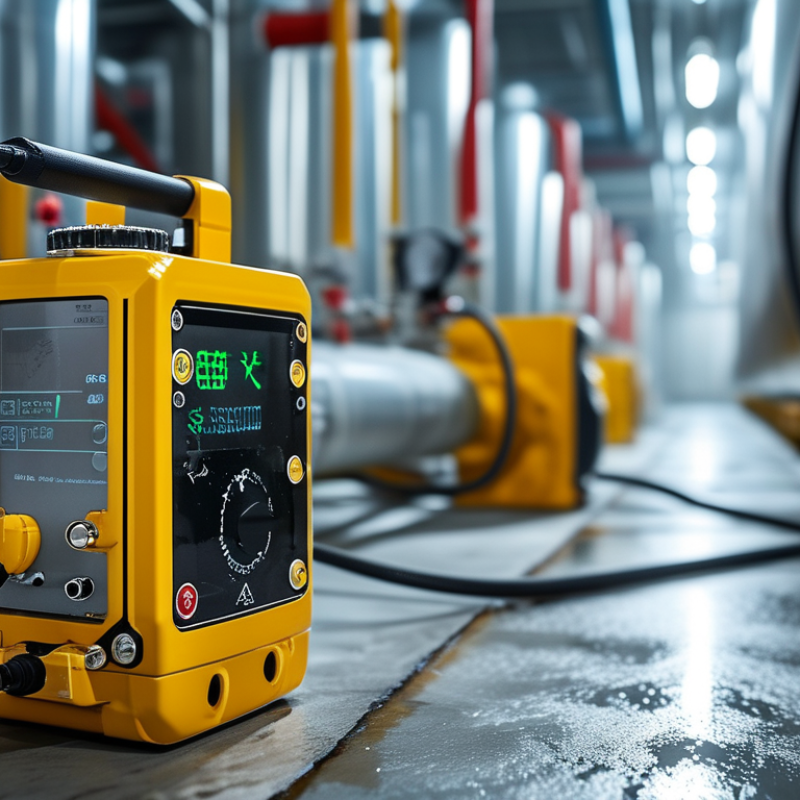
Phosgene gas is a highly toxic, colorless gas with a faint odor that may resemble freshly cut hay. Odor is not a dependable warning. People can become exposed before noticing anything unusual. The gas can damage lung tissue, and serious symptoms may appear several hours later. Early detection matters because workers need time to leave the area and receive medical evaluation.
A phosgene detector monitors air for very low concentrations. Many portable units use an electrochemical sensor, where phosgene triggers a chemical reaction and creates an electrical signal. The device then compares that signal with preset alarm levels. Fixed systems can provide continuous monitoring near storage areas, process equipment, or low-lying spaces. Accurate readings depend on calibration, sensor condition, airflow, and correct placement. A detector is not a substitute for ventilation or emergency procedures. This point is easy to overlook.
Tips: Test alarms before each shift. Check the sensor’s service date. Place monitors where gas could collect, but avoid blocking airflow. Never rely on smell. A weak alarm may still indicate a serious hazard. Personnel should follow site procedures and seek professional medical advice after suspected exposure. In practice, detector readings can be affected by temperature, humidity, and interfering chemicals. Reviewing those limitations regularly is worthwhile, because no instrument is perfect.
A phosgene gas detector is built around several coordinated components. Its sensing element is usually an electrochemical cell, where phosgene reacts at an electrode and produces a measurable electrical signal. This signal changes with concentration. The sensor must be selective, because solvents, chlorine compounds, and humidity can affect readings.
The sampling system is equally important. A diffusion inlet allows surrounding air to reach the sensor naturally. Pumped instruments draw air through tubing, filters, and a flow-control path. Filters can reduce dust and moisture, but they may also slow response. That trade-off deserves attention. A microprocessor converts sensor output into concentration values, while a display shows readings in ppm. Audible, visual, and vibrating alarms warn workers when limits are approached.
Power comes from a battery and supporting circuits. Data logging may record exposure peaks, alarm events, and calibration history. Many systems also include a temperature sensor, self-test function, and calibration port. The NIOSH Pocket Guide lists a 0.1 ppm ceiling limit and a 2 ppm immediately dangerous concentration for phosgene. These figures show why alarm settings require careful verification, not guesswork. IEC 62990-1 also emphasizes performance testing, response time, and alarm reliability for workplace gas detectors. A detector can still drift. Routine bump testing, scheduled calibration, clean sampling paths, and trained operators remain essential. In field conditions, the weakest component may be maintenance rather than electronics.
A phosgene gas detector measures concentration, not simply presence. In a typical electrochemical detector, air enters through a diffusion membrane. Phosgene reacts at an electrode inside the cell. This reaction produces a small electrical current. The instrument converts that current into a parts-per-million reading.
The signal depends on gas flow, temperature, humidity, and sensor condition. Calibration gas gives the detector a known reference point. A technician may expose the inlet to a certified concentration, check the response, and adjust the reading. Many detectors also use filters to reduce interference from other gases. Still, cross-sensitivity can occur. The instrument is not a crystal ball.
Infrared models use a different principle. They measure how phosgene absorbs selected infrared wavelengths. The stronger the absorption, the higher the calculated concentration. This approach can improve selectivity, especially where several gases are present. NIOSH’s Pocket Guide lists a 0.02 ppm ceiling exposure limit for phosgene, while OSHA’s Chemical Data guidance lists 0.1 ppm as a ceiling value. These limits show why low-level accuracy matters. A delayed alarm can matter more than a bright display. Field reports also emphasize bump testing, sensor replacement, and documented calibration. One practical weakness remains: a detector can respond correctly while sampling the wrong air. Placement near breathing height, process openings, and ventilation paths requires professional judgment.
A phosgene gas detector monitors the air for traces of phosgene, a highly toxic industrial gas. Most portable units use an electrochemical sensor or another selective sensing method. Air reaches the sensor through diffusion or a small pump. The instrument then converts the chemical reaction into a concentration reading and triggers an alarm when levels exceed a preset limit.
Accuracy depends on more than the sensor itself. Calibration must use a verified reference gas and follow the manufacturer’s specified schedule. Temperature, humidity, pressure, and airborne chemicals can change the signal. Dust or blocked filters may slow sampling. An aging sensor can also drift quietly. It may still display numbers.
Response time depends on airflow, sampling distance, tubing length, and pump speed. A detector near the leak may respond faster than one connected through a long sampling line. Tight filters can protect the sensor but delay detection. Low gas concentrations may also produce a slower signal than strong exposures. Placement matters greatly; poor positioning can leave stagnant air unmeasured. Routine bump checks, documented calibration, and trained operation help reveal these weaknesses. Still, a field reading is not automatically reliable. I would question any result that conflicts with site conditions, alarm history, or a second properly maintained instrument. A detector supports decisions, but it cannot replace a controlled emergency procedure or professional assessment.
| Data Dimension | Typical Data or Operating Characteristic | How It Works or Why It Matters | Main Effect on Accuracy or Response Time |
|---|---|---|---|
| Target gas | Phosgene (COCl2) | Phosgene is a highly toxic, reactive gas that can damage the respiratory system. A detector measures its concentration in air and provides an alarm when a configured limit is reached. | Because phosgene can be hazardous at very low concentrations, sensor sensitivity, calibration quality, and alarm settings are critical. |
| Electrochemical detection | Common portable-detector method | Phosgene diffuses through a membrane and reacts at an electrode. The resulting electrical current is approximately proportional to the gas concentration within the sensor’s specified range. | Usually provides good low-level sensitivity, but readings can be affected by temperature, humidity, sensor aging, and interfering gases. |
| Colorimetric detection | Detector tube or reagent-based measurement | A measured air sample reacts with a chemical reagent that changes color. The stain length or color intensity is compared with a calibrated scale. | Often useful for spot checks, but results depend on sampling volume, expiration date, lighting, operator interpretation, and correct sampling technique. |
| Infrared or optical detection | Instrument-dependent; often used for continuous monitoring | The instrument analyzes how phosgene absorbs infrared or other selected wavelengths. The measured absorption is converted into concentration. | Can support continuous measurement, but optical path cleanliness, pressure, temperature, spectral interference, and instrument configuration influence performance. |
| Typical response-time definition | T90: time to reach 90% of the final reading | Response time is commonly reported as T90, rather than the time required for the display to show any detectable value. | Actual response depends on the sensor design, gas concentration, sample delivery system, tubing length, flow rate, and whether the detector is diffusion or pump operated. |
| Sensor response time | Often measured in seconds to approximately one minute for many portable designs; verify the specific instrument specification | The sensing element must receive enough phosgene to produce a stable signal. Pumped systems may respond faster at the sensor but can add transport delay through tubing. | Long tubing, low flow, filters, water traps, and restrictive sampling lines generally increase the time before the detector reflects the surrounding atmosphere. |
| Calibration condition | Use a certified phosgene reference gas and a documented procedure | Calibration establishes the relationship between sensor output and concentration. A functional or bump test checks whether the complete alarm path responds to gas. | Incorrect gas concentration, expired calibration gas, leaks, an unsuitable regulator, or poor flow control can create systematic measurement errors. |
| Temperature | Use only within the detector’s specified operating range | Temperature changes can alter electrochemical reaction rates, gas diffusion, electronics, and the volume or density of the sampled gas. | Operation outside the specified range may cause zero drift, sensitivity changes, slower response, or false alarms. Allow the instrument to equilibrate before use. |
| Relative humidity and condensation | High humidity, rapid humidity changes, and liquid water are important risks | Moisture can affect diffusion membranes, reagent chemistry, sensor electrolyte, filters, and optical surfaces. Condensation can obstruct or alter the sample path. | Readings may drift or respond slowly. Keep sampling components dry and follow the manufacturer’s specified humidity limits. |
| Interfering gases | Depends on sensor chemistry and concentration | Other reactive or acidic gases may produce a response similar to phosgene, suppress the signal, or damage the sensor. | Cross-sensitivity can cause false high or false low readings. Select a sensor with documented interference data for the intended workplace. |
| Sensor age and exposure history | Performance normally changes over the service life | Long-term exposure, repeated high concentrations, chemical contamination, drying, and storage conditions can reduce sensor sensitivity or increase baseline drift. | Age-related drift can reduce accuracy and extend response time. Perform scheduled calibration and replace sensors according to validated service criteria. |
| Sampling method | Diffusion sampling versus pumped sampling | Diffusion units rely on the natural movement of gas to the sensor. Pumped units actively draw air through a probe, filter, or tubing. | Pumped sampling can test remote or confined locations, but leaks, blocked filters, insufficient flow, and tubing adsorption can delay or distort the result. |
| Air movement and placement | Place the inlet where the breathing zone or release pathway is represented | Ventilation, buoyancy, obstacles, and release momentum can produce concentration gradients. Phosgene is denser than air, but local airflow can dominate its distribution. | Poor placement may cause the detector to sample a concentration that does not represent worker exposure or the actual hazard location. |
| Filters and protective accessories | Dust filters, splash guards, reactive filters, and sample conditioning components | Accessories protect the sensor from particles or liquids and may remove selected contaminants before the sample reaches the sensing element. | Clogging, incorrect filter selection, or reactive media can reduce flow, delay response, or remove part of the phosgene before measurement. |
| Alarm settings | Set according to the applicable occupational or site-specific risk assessment | Detectors may provide low, high, short-term, or time-weighted alarms. Alarm thresholds should reflect the governing safety requirements and emergency procedures. | An alarm threshold is not the same as detector accuracy. A correctly functioning detector can still require evacuation or confirmation by an independent method. |
| Maintenance and verification | Pre-use inspection, bump testing, periodic calibration, and documented service | Inspection confirms that the inlet, display, battery, pump, audible alarm, visual alarm, and vibration alarm are functional. | Routine verification helps identify blocked paths, damaged components, calibration drift, and alarm failures before the detector is needed in an emergency. |
Phosgene gas detectors are used wherever accidental releases may occur. Typical locations include chemical manufacturing plants, polymer production areas, storage rooms, laboratories, and emergency-response zones. Fixed detectors watch high-risk points, such as valves, transfer lines, and enclosed process rooms. Portable monitors support inspections and maintenance work. They provide movement, not permission to ignore controls.
The limits explain their importance. The U.S. National Institute for Occupational Safety and Health lists 2 ppm as phosgene’s immediately dangerous to life or health concentration. OSHA’s ceiling limit is 0.1 ppm. These figures come from the NIOSH Pocket Guide and OSHA chemical exposure guidance. Alarm settings must follow the site’s risk assessment and applicable requirements. Small leaks can be difficult to notice.
Maintenance needs discipline. Technicians should perform a bump test before each shift or according to the written program. Calibration should use certified test gas at the scheduled interval. Sensors, batteries, filters, sampling pumps, and alarm indicators also require inspection. Dust, moisture, blocked tubing, or an exhausted sensor can create false confidence. Keep records of every test, failure, repair, and sensor replacement. That paperwork feels excessive until an alarm behaves strangely. A detector is not a guarantee. Its readings should be checked against ventilation performance, process conditions, and worker observations. Personnel need practical training, including evacuation decisions and reporting procedures, not only classroom theory.
A phosgene gas detector is a portable or fixed instrument used to identify and measure phosgene (COCl₂), a highly toxic gas. Common detector designs use a chemically specific sensor that converts phosgene exposure into an electrical signal, activates alarms, and may record concentration and time.
The chart compares recognized phosgene exposure reference values. OSHA and NIOSH list a ceiling value of 0.1 ppm, while the NIOSH immediately dangerous to life or health (IDLH) value is 2 ppm. These values are reference limits, not universal alarm settings; alarm thresholds must be selected through a site-specific risk assessment.
Phosgene detectors are used in chemical manufacturing, pesticide and pharmaceutical production, laboratories, hazardous-material response, storage areas, and locations where phosgene may be generated during industrial processes or fires. Maintenance typically includes routine bump testing, calibration with a certified test gas according to the manufacturer’s instructions, inspection of the sensor and pump, battery checks, filter replacement when required, and keeping records of every test and service action.
: Phosgene is a highly toxic, colorless gas. Its odor may resemble freshly cut hay. Smell is unreliable. Exposure can happen before warning signs appear.
Phosgene can damage lung tissue. Serious symptoms may develop several hours after exposure. An alarm gives workers time to leave and seek medical evaluation.
Many detectors use an electrochemical sensor. Air passes through a diffusion membrane. Phosgene creates a small electrical current inside the sensor. The device converts that signal into a concentration reading.
Yes, suitable detectors can measure low concentrations. Accuracy depends on calibration, airflow, temperature, humidity, and sensor condition. A bright display does not guarantee a correct result.
Place it near possible release points and breathing height. Consider process openings, ventilation paths, and low-lying spaces. Do not block the air inlet. Wrong placement can produce a misleadingly safe reading.
Test the alarm before each shift. Check the sensor service date. Perform bump tests and documented calibration as required. Replace aging sensors promptly.
Yes, interfering chemicals may cause cross-sensitivity. Filters can reduce some interference. They cannot remove every uncertainty. The instrument is not a crystal ball.
No. A detector supports ventilation and emergency procedures. It does not replace them. Workers should follow site instructions after any suspected exposure and seek professional medical advice.
A Phosgene Gas Detector is a safety instrument designed to identify and measure phosgene, a highly toxic industrial gas that may be released during specific manufacturing, storage, or emergency situations. Because phosgene can be difficult to detect through human senses, reliable monitoring is essential for protecting workers and nearby communities. These detectors typically include a sensing element, sampling system, signal processor, display, alarm, power source, and protective housing. Depending on the design, the sensor reacts to phosgene and converts that reaction into an electrical signal indicating the gas concentration.
Detector accuracy and response time can be influenced by temperature, humidity, airflow, sensor condition, calibration, sampling distance, and interference from other chemicals. Phosgene Gas Detector systems are commonly used in industrial facilities, laboratories, storage areas, and emergency response environments. Regular calibration, functional testing, sensor replacement, cleaning, battery checks, and inspection of alarms help maintain dependable performance. Proper installation and routine maintenance ensure that the detector can provide timely warnings and support a safe, well-managed response.
