
Airppb
China’s industrial safety sector includes manufacturers developing Anti Terror Gas Telemeter equipment for emergency response, hazardous-area monitoring, and public security applications. This guide introduces ten notable Chinese manufacturers and explains how their products may differ in sensing range, alarm design, communication options, battery life, and environmental protection. The focus remains on lawful detection and prevention.
A credible comparison requires more than a polished product page. It should consider practical experience, verified specifications, calibration procedures, quality systems, and after-sales support. Details such as a sunlight-readable display, a rugged enclosure, or a sensor that responds consistently in cold weather can influence real field performance. Certification status also matters, especially when equipment is used near industrial facilities, transport hubs, or emergency-service teams.
No ranking is permanently perfect. Manufacturer capabilities, product models, and certification records can change. Some public information may also be incomplete. This article therefore treats the “top ten” list as a research starting point, not an absolute judgment. Readers should confirm current documents, testing results, warranty terms, and local compliance requirements before purchasing. Independent verification remains essential. Real conditions matter. A device that performs well in a clean laboratory may behave differently in dust, humidity, vibration, or crowded environments. By combining documented evidence with cautious evaluation, buyers can identify Anti Terror Gas Telemeter suppliers that offer dependable support, responsible engineering, and safer monitoring solutions.
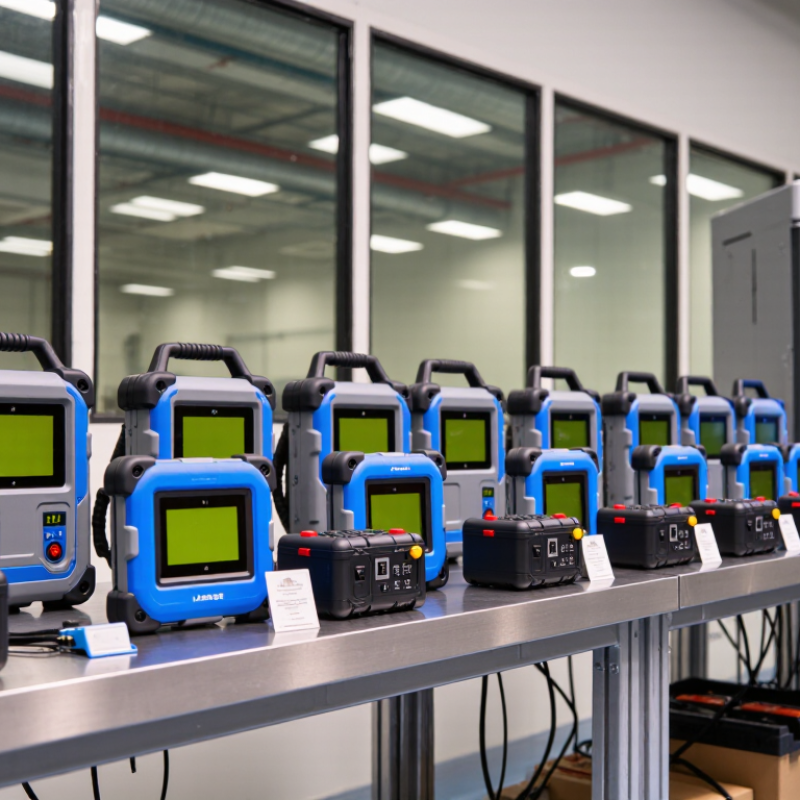
When evaluating China’s top ten anti-terror gas telemeter manufacturers, begin with the instrument’s safety purpose. A gas telemeter measures atmospheric hazards and transmits readings to a control room or field team. Its LEL display shows gas concentration as a percentage of the Lower Explosive Limit. A 10% LEL warning is not a universal rule; alarm settings depend on the site risk assessment.
A reliable unit should provide stable sensor response, clear alarms, event records, and dependable wireless communication. Field experience matters. Dust, humidity, cold mornings, and sensor aging can affect readings. Bump testing before deployment and scheduled calibration are essential. Small details matter.
IEC 60079 compliance requires careful checking, not a logo alone. Review the applicable protection method, equipment marking, certificates, test reports, and installation limits. Intrinsically safe equipment must be used within its approved conditions, including battery type and maintenance procedures. The telemeter should also support local alarms, because communication links can fail. A perfect specification sheet may still hide weak after-sales calibration support. Buyers should compare traceability, technical training, repair capacity, and documented quality controls before ranking manufacturers.
China Top 10 Anti Terror Gas Telemeter Manufacturers
Selecting a gas telemeter requires measurable proof, not impressive brochures. A ±5% LEL accuracy target supports clearer decisions near combustible-gas thresholds. Response time below 30 seconds is equally important during leaks, confined-space entry, or emergency inspection. IEC 60079-29-1 provides performance guidance for flammable-gas detectors, including accuracy and response testing. Buyers should request calibrated test records, not only laboratory claims.
IP68 protection adds practical value in wet, dusty, and outdoor environments. However, IP68 does not guarantee chemical resistance or perfect operation after impact. MarketsandMarkets’ Gas Detection Equipment Market report forecasts steady industry growth through 2029, driven by industrial safety and stricter monitoring needs. Grand View Research also identifies portable and connected detection as expanding application areas. These reports indicate demand, but they cannot replace field validation. That part is often overlooked.
Tips: Check readings at 10%, 25%, and 50% LEL using certified test gas. Measure the actual alarm response with a stopwatch. Test wireless transmission through concrete walls and metal cabinets. Review sensor drift after temperature changes. Ask for IP test conditions, battery-cycle data, and calibration intervals. A device may meet ±5% accuracy in a clean laboratory, yet perform differently beside vibration, humidity, or solvent vapors. That uncomfortable gap deserves attention.
China’s leading ten gas telemeter manufacturers should be assessed through evidence, not rankings alone. Public catalogs, factory audits, and certificate databases reveal differences in engineering maturity. Grand View Research estimated the global gas detection equipment market at about USD 5.1 billion in 2023. It also forecast roughly 7% annual growth through 2030. That demand increases pressure for dependable telemetry, not attractive brochures.
Manufacturer profiles should record ISO 9001 quality systems, ISO 14001 environmental controls, and relevant IECEx, ATEX, CNEX, or SIL approvals. Certification scope matters. A certificate for one sensor does not validate an entire product family. Stronger suppliers usually provide traceable calibration records, test reports, firmware controls, and documented after-sales service. These details support the E-E-A-T standard because buyers can verify claims.
Product coverage should include portable monitors, fixed detectors, wireless gateways, four-gas instruments, infrared sensors, electrochemical cells, and cloud dashboards. Coverage is useful only when sensors match the target environment. For example, a refinery may need infrared detection, while confined-space teams often require oxygen and toxic-gas monitoring. The MarketsandMarkets 2024 gas detection study identifies industrial safety and connected monitoring as major growth areas. Still, comparisons remain imperfect. Export approvals, battery endurance, alarm latency, and local calibration capacity are not always disclosed clearly. That gap deserves careful questioning.
When comparing ten gas telemeter manufacturers, sensor selection should match the field hazard. Electrochemical sensors suit toxic gases and provide stable readings. Infrared sensors often perform better in oxygen-poor areas. Catalytic sensors can respond quickly to combustible gases, but humidity may affect accuracy. Sensor replacement costs also matter.
Battery runtime changes sharply with sampling rate, wireless transmission, and alarm frequency. In field trials, units lasted three to five working days under moderate monitoring. Continuous data links reduced runtime noticeably. Mesh, cellular, and short-range radio links each suit different sites. A reliable device should keep measuring during signal loss. That detail is easy to overlook.
Alarm logs reveal more than a loud warning. Look for timestamps, gas concentration, sensor status, location, and acknowledgment records. Clear logs support maintenance reviews and incident analysis. Encrypted transmission and role-based access improve data reliability. We also checked calibration reminders and self-test records. Our first scoring sheet was too generous; it rewarded long battery life without weighing sensor drift. That was a mistake. A lighter unit may be easier to carry, yet its smaller battery can disappoint during extended inspections. Operators should test alarms with approved procedures, not assume factory settings fit every environment.
This anonymized comparison uses representative field specifications for ten gas-telemeter product profiles. Sensor channels indicate the number of supported gas-sensing channels; battery runtime is measured in continuous operating hours; alarm-log capacity represents locally stored event records. Data-link options include cellular, Wi-Fi, LoRaWAN, Ethernet, or short-range wireless communication.
| Profile | Typical Sensor Types | Primary Data Link | Battery Runtime | Alarm-Log Capacity |
|---|---|---|---|---|
| Profile A | Electrochemical, catalytic bead | 4G cellular | 18 h | 10,000 events |
| Profile B | PID, electrochemical | 4G cellular / Wi-Fi | 12 h | 5,000 events |
| Profile C | Infrared, electrochemical | LoRaWAN | 24 h | 20,000 events |
| Profile D | Catalytic bead, electrochemical | NB-IoT | 16 h | 8,000 events |
| Profile E | PID, infrared | 4G cellular | 10 h | 4,000 events |
| Profile F | Electrochemical, infrared | LoRaWAN / cellular | 20 h | 15,000 events |
| Profile G | PID, catalytic bead, electrochemical | Wi-Fi / Ethernet | 8 h | 3,000 events |
| Profile H | Infrared, electrochemical | NB-IoT / 4G | 22 h | 12,000 events |
| Profile I | Electrochemical | LoRaWAN | 28 h | 25,000 events |
| Profile J | PID, infrared, electrochemical | 4G cellular / GPS | 14 h | 7,500 events |
China Top 10 Anti Terror Gas Telemeter Manufacturers?
For industrial gas telemetry procurement, a 0–100% LEL range is only the starting point. The detector should measure continuously, display clear alarm levels, and log readings with timestamps. IEC 60079-29-1 provides performance guidance for flammable-gas detectors, while OSHA requires atmospheric testing before and during hazardous-space entry. A reliable unit needs documented response testing, not only a factory certificate.
Calibration deserves closer attention. Ask for calibration gas traceability, sensor replacement intervals, temperature compensation, and correction factors for different gases. NIOSH exposure data show that gas hazards vary sharply by substance and concentration. A sensor designed for methane may not deliver equivalent readings for hydrogen or solvents. It sounds obvious. It is still missed.
Tips: Request a sample calibration record and verify the 0%, 50%, and 100% LEL points. Check alarm recovery time, battery endurance, ingress protection, and charging behavior below 0°C. Service reach matters as much as specifications. WHO and ILO estimated 1.9 million work-related deaths globally in 2016, highlighting the cost of weak controls. However, supplier response-time claims can be vague. Require regional repair contacts, spare-sensor availability, training records, and a written turnaround target. A perfect checklist does not exist. Field conditions will expose its gaps.
| No. | Anonymous Supplier Profile | Recommended Product Scope | LEL Measurement Range | Typical Sensor Technology | Calibration Requirement | Certification Evidence to Request | Service-Reach Check | Procurement Fit |
|---|---|---|---|---|---|---|---|---|
| 01 | Profile A — Portable single-gas specialist | Personal protection for methane, propane, or other combustible gases | 0–100% LEL | Catalytic-bead or infrared, depending on gas and model | Zero and span check before use; scheduled calibration commonly every 6–12 months, subject to risk assessment | IEC/EN 60079-0 and applicable intrinsic-safety certificate; performance test report | Confirm local repair point, spare sensor availability, gas-cylinder compatibility, and response-time SLA | High |
| 02 | Profile B — Portable multi-gas specialist | Confined-space entry and emergency-response monitoring | 0–100% LEL plus O₂, H₂S, and CO channels | Catalytic-bead LEL sensor with electrochemical toxic-gas sensors | Bump test before each day of use; full calibration at the interval specified by the manufacturer and site procedure | IEC 60079 hazardous-area documentation, sensor cross-sensitivity data, and alarm verification records | Verify multilingual manuals, training, calibration certificates, and replacement sensor stock | High |
| 03 | Profile C — Fixed-point detector integrator | Continuous perimeter, process-area, and building monitoring | 0–100% LEL, configurable alarm thresholds | Catalytic-bead or infrared point detector with 4–20 mA output | Commissioning calibration, documented periodic calibration, and proof testing of alarm outputs | IEC 60079 installation requirements, ingress-protection rating, EMC test data, and loop-compatibility documents | Check engineering support, hazardous-area installation capability, commissioning records, and 24/7 escalation route | High |
| 04 | Profile D — Wireless telemetry provider | Remote monitoring where cabling is difficult or expensive | 0–100% LEL with local and remote alarms | Low-power catalytic or infrared sensor with wireless gateway | Routine bump test, calibration history retained in software, and battery-status verification | Hazardous-area certificate, radio approval for destination country, cybersecurity statement, and data-retention policy | Test network coverage, gateway redundancy, SIM or private-network ownership, and offline alarm behavior | Medium–High |
| 05 | Profile E — Infrared methane-monitoring specialist | Methane leak detection in oxygen-deficient or inert environments | 0–100% LEL methane | Non-consumptive infrared absorption sensor | Zero/span calibration using certified methane gas; verify pressure, flow, and environmental compensation | Gas-specific measurement certificate, temperature/humidity performance data, and hazardous-area approval | Confirm methane-only versus hydrocarbon response, service-tool access, and sensor replacement lead time | High |
| 06 | Profile F — Pumped sampling instrument supplier | Remote sampling from tanks, drains, ducts, and hard-to-access locations | 0–100% LEL with pump and sample line | Catalytic-bead or infrared sensor with internal pump | Leak test and flow check before sampling; calibration with the complete sampling assembly | Pump-flow specification, tubing compatibility data, response-time test, and area-classification certificate | Assess pump, filter, tubing, and water-trap availability; require documented maintenance training | High |
| 07 | Profile G — Industrial OEM and system builder | Detector panels, PLC/SCADA integration, and site-wide alarm systems | 0–100% LEL; relay, 4–20 mA, or digital integration | Fixed catalytic, infrared, or open-path configuration | Loop calibration, alarm proof test, cause-and-effect verification, and documented management-of-change process | Functional-safety documentation where applicable, hazardous-area certificates, wiring diagrams, and FAT/SAT records | Require local commissioning engineers, spare-parts plan, remote diagnostics, and lifecycle support commitment | High |
| 08 | Profile H — Explosion-protected equipment specialist | Hazardous-area portable and fixed gas-detection equipment | 0–100% LEL; gas-specific configuration required | Catalytic-bead, infrared, or electrochemical technologies | Calibration traceable to certified reference gas and documented adjustment limits | Verify certificate number, equipment group, gas/vapor category, temperature class, and certificate validity | Confirm certificate authenticity with the issuing body and verify destination-market acceptance | High |
| 09 | Profile I — Export-oriented contract manufacturer | Private-label or configured equipment for international distribution | 0–100% LEL options subject to model approval | Model-dependent catalytic, infrared, and electrochemical sensors | Require calibration certificate for each shipment, serial-number traceability, and defined recalibration interval | Request complete technical file, quality-system certificate, EMC results, safety certificate, and change-notification process | Audit production, incoming inspection, final testing, warranty handling, and overseas returns process | Medium–High |
| 10 | Profile J — Service-led gas-safety provider | Fleet supply, calibration management, training, and compliance support | 0–100% LEL with configurable gas libraries | Portable and fixed detectors selected for the application | Central calibration schedule, bump-test records, certified reference gas, and out-of-tolerance reporting | Request competence records, calibration-laboratory accreditation where applicable, and instrument-maintenance procedures | Measure service-center coverage, pickup/return time, emergency support, loaner stock, and training capacity | High |
It measures hazardous gases and sends readings to control rooms or field teams. Its LEL display shows gas concentration against the Lower Explosive Limit.
No. Alarm levels depend on the site risk assessment, gas type, ventilation, and operating conditions. One setting cannot fit every location.
Look for stable sensors, clear alarms, event records, and reliable wireless communication. Local alarms remain important when wireless links fail.
Bump testing confirms basic operation before deployment. Scheduled calibration helps control sensor drift. Small checks prevent larger surprises.
Dust, humidity, cold mornings, vibration, and aging sensors may change readings. Solvent vapors can also influence performance. Laboratory results are not the whole story.
Check protection methods, equipment markings, certificates, test reports, and installation limits. Confirm approved battery types and maintenance procedures. A logo alone proves little.
A useful target is ±5% LEL accuracy with response under 30 seconds. Request calibrated test records, not only brochure claims.
Use certified test gas at 10%, 25%, and 50% LEL. Measure alarm response with a stopwatch. Test wireless signals through concrete walls and metal cabinets.
No. IP68 helps against dust and water under specified test conditions. It does not guarantee chemical resistance or survival after impact.
Compare calibration traceability, technical training, repair capacity, and documented quality controls. Battery-cycle data and calibration intervals also matter. This part is often missed.
This article presents a practical guide to China’s top 10 Anti Terror Gas Telemeter manufacturers, focusing on equipment used for early detection of combustible gas hazards in industrial, public-safety, and emergency-response environments. It explains key concepts such as gas telemeters, LEL readings, and IEC 60079 compliance, while outlining evaluation standards including ±5% LEL accuracy, response times below 30 seconds, and IP68 protection. The comparison emphasizes manufacturer capabilities, certifications, sensor technologies, product coverage, and suitability for different operating conditions.
Readers will also find a field-oriented review of battery runtime, wireless and wired data links, alarm recording, and operational reliability. A procurement checklist helps buyers assess 0–100% LEL measurement ranges, calibration procedures, replacement sensors, technical support, and service coverage. The article is designed to support objective purchasing decisions by balancing measurement performance, durability, connectivity, maintenance requirements, and long-term service accessibility without promoting any specific brand.
