
Airppb Airppb

China Best Air Monitoring Equipment Manufacturers?

Time:2026-09-23 Author:Sophia
0%

China Best Air Monitoring Equipment Manufacturers? This question deserves more than a ranking based on factory size or website design. Air Monitoring equipment supports decisions in industrial plants, cities, laboratories, and construction zones. Its readings can influence public warnings, compliance reviews, and workplace controls. Accuracy matters.

The World Health Organization’s 2022 Air Quality Database reported that almost the entire global population breathes air exceeding its guideline levels for fine particulate matter. The IQAir 2024 World Air Quality Report also showed persistent PM2.5 concerns across many Asian cities. These findings increase demand for reliable particulate, gas, meteorological, and emissions monitoring systems. Yet, market figures alone cannot identify the best manufacturer. Product performance requires closer inspection.

Look at the details.

A credible Chinese manufacturer should demonstrate traceable calibration, stable sensor performance, clear detection limits, and practical after-sales support. Test records should explain PM2.5, PM10, SO2, NO2, CO, and ozone accuracy under changing humidity and temperature. Certification can help, but it should not replace independent verification. ISO 17025 laboratory capability, ISO 9001 quality management, and applicable national or regional standards provide useful reference points. They do not guarantee every installation will perform perfectly.

This outline compares leading Chinese manufacturers through product range, measurement technology, certifications, customization, service networks, and documented application experience. It also considers installation realities, such as roadside dust, coastal corrosion, and power interruptions. Some comparisons remain imperfect because manufacturers disclose different data. That limitation deserves attention. A careful buyer should request recent test reports, calibration intervals, sample data, and customer references before selecting equipment.
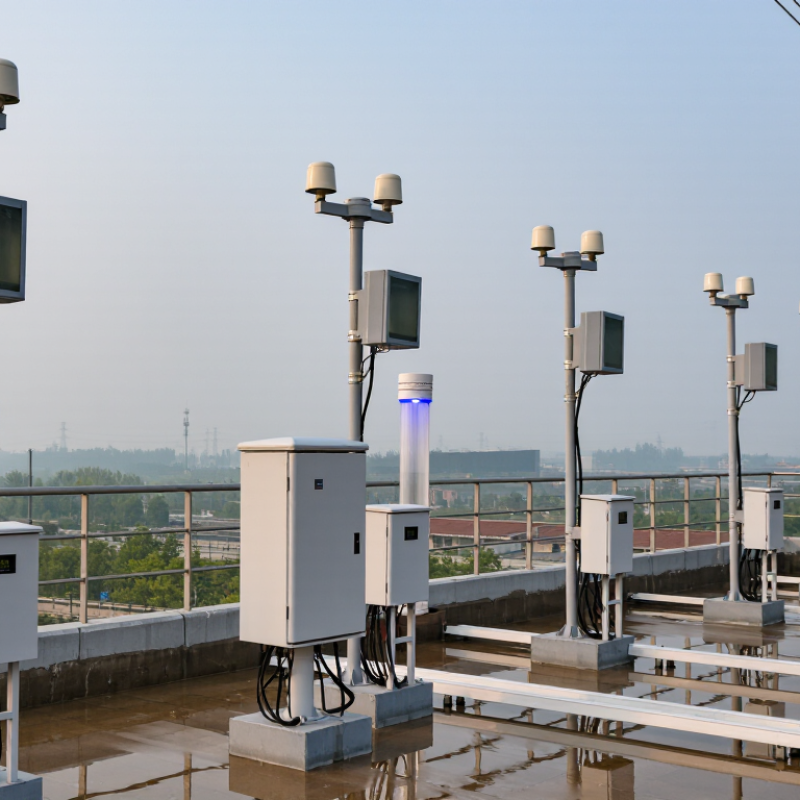
China Best Air Monitoring Equipment Manufacturers?

What Makes an Air Monitoring Equipment Manufacturer the Best in China

What Makes an Air Monitoring Equipment Manufacturer the Best in China

The best manufacturer combines measurement accuracy, field experience, and transparent verification. This matters because the World Health Organization’s 2021 Global Air Quality Guidelines set annual PM2.5 guidance at only 5 µg/m³. Small errors can change a compliance decision. Reliable manufacturers therefore publish calibration methods, detection limits, uncertainty data, and maintenance intervals. They also test instruments in humid factories, dusty construction areas, and cold northern cities. Laboratory performance is not enough.

Data quality needs a complete system. Strong manufacturers provide traceable calibration, stable sensors, secure data transmission, and clear alarm records. The State of Global Air 2024 report estimated that air pollution contributed to 8.1 million deaths in 2021. That figure shows why monitoring equipment must support public decisions, not merely produce attractive dashboards. Local technical teams are valuable. They understand installation habits, power conditions, and seasonal pollution patterns. Response time matters too.

No manufacturer is perfect. Sensor drift, blocked inlets, and poor placement can still weaken results. This is where honest suppliers stand apart. They explain limitations, recommend independent checks, and correct flawed data instead of hiding it. Buyers should request field validation reports and long-term maintenance evidence. A lower purchase price may look efficient, but unreliable readings become expensive later. In practice, trust is built slowly, one verified measurement at a time.

China’s Leading Air Monitoring Equipment Manufacturers by Product Focus

China’s leading air monitoring equipment manufacturers are increasingly defined by product focus rather than broad catalogues. Some specialize in particulate matter monitors for PM2.5, PM10, and dust exposure. Their systems often combine optical sensors, heated inlets, and automatic data logging. Field users should check readings near roads, construction sites, and industrial boundaries.

Gas monitoring specialists usually develop analyzers for ozone, nitrogen oxides, sulfur dioxide, carbon monoxide, and volatile organic compounds. Product quality depends on sensor stability, detection limits, response time, and resistance to humidity. A reliable manufacturer should provide calibration procedures, test records, and clear maintenance intervals. Calibration is not optional.

Other manufacturers focus on portable instruments, indoor air quality stations, or continuous emission monitoring systems. Portable units are useful for inspections because technicians can carry them into workshops, schools, and traffic corridors. Fixed stations need stronger enclosures, secure communications, and stable power protection. Weather modules also matter, since wind speed, temperature, and pressure can change pollutant readings. Look for traceable testing, documented software updates, and support for recognized measurement standards. ISO 17025-linked calibration is valuable, though paperwork alone cannot prove field performance. A practical trial under local conditions may reveal weaknesses that a factory demonstration misses. That matters.

Key Technologies Used in Modern Air Quality Monitoring Systems

Modern air quality monitoring systems combine several sensing technologies. For particulate matter, laser-scattering sensors estimate PM1, PM2.5, and PM10 concentrations. A small fan draws air through a controlled chamber. The laser beam reveals particles by measuring scattered light. These sensors provide fast readings, but humidity can distort results.

Gas measurements require different methods. Electrochemical cells detect gases such as carbon monoxide, nitrogen dioxide, and sulfur dioxide. Non-dispersive infrared sensors measure carbon dioxide through infrared absorption. Photoionization sensors can track selected volatile organic compounds. Each method has weaknesses. Sensor drift remains a practical concern.

Reliable systems also include temperature, humidity, pressure, and wind sensors. These readings support compensation and help explain sudden changes. Edge processors can remove faulty values before transmission. Cloud platforms then store trends, alarms, and calibration records. Yet automation is not enough. During field work, technicians may find dust buildup, blocked inlets, or unstable power supplies. Regular zero checks and scheduled calibration are essential. Reference instruments remain important for verifying lower-cost devices.

For manufacturers in China, strong engineering should include traceable testing and clear maintenance instructions. Data should carry timestamps, sensor status, and uncertainty information. A low-cost sensor may show a useful pattern without delivering laboratory accuracy. That does not make it useless. It needs honest limits. No monitoring system is perfect, and real-world performance often depends on installation, servicing, and local weather conditions.

Industry Standards, Certifications, and Quality Evaluation Criteria

Choosing China’s best air monitoring equipment manufacturers requires more than comparing prices or polished brochures. Industry standards provide the starting point. Buyers should check whether instruments follow applicable Chinese environmental requirements, international measurement standards, and market-specific rules. ISO 9001 supports consistent production, while ISO/IEC 17025 accreditation strengthens confidence in calibration laboratory results. Certifications must match the product and destination market. A certificate alone is not proof.

Quality evaluation should begin with measurable performance. Review detection limits, response time, accuracy, repeatability, and cross-sensitivity for gas instruments. For particulate monitors, examine particle-size ranges, flow stability, and humidity compensation. Ask for calibration records with traceability to recognized national or international references. A serious manufacturer should explain its quality control process, not simply display compliance logos.

Field experience matters. Test equipment in dusty workshops, humid streets, or changing temperatures before large-scale deployment. Inspect data logs, alarm settings, remote communication, and maintenance access. Independent laboratory reports and customer application records can reveal weaknesses that factory demonstrations miss. Some suppliers may provide excellent instruments but limited after-sales training. That gap can damage long-term data reliability. No test is perfect. Repeated verification, clear documentation, and honest discussion of limitations remain essential when evaluating air monitoring equipment.

China Best Air Monitoring Equipment Manufacturers? — Industry Standards, Certifications, and Quality Evaluation Criteria

Evaluation Dimension Relevant Standard, Certification, or Reference What Should Be Verified Recommended Evaluation Criteria Typical Evidence
Quality Management System ISO 9001:2015 Whether the manufacturer operates a documented quality management system covering design, purchasing, production, testing, delivery, and corrective action. The certificate should be valid, issued by an accredited certification body, and cover the relevant monitoring equipment scope. Valid certificate, certification scope, audit records, nonconformity and corrective-action procedures.
Environmental Management ISO 14001:2015 Management of environmental impacts arising from manufacturing, chemical use, waste handling, and energy consumption. Prefer a current certificate with a scope that includes the actual production site and relevant manufacturing activities. Environmental management certificate, waste records, compliance evaluations, and environmental objectives.
Laboratory Competence ISO/IEC 17025:2017 Technical competence of calibration and testing laboratories used for instrument verification, performance testing, and uncertainty evaluation. The laboratory scope should specifically include the measured pollutants, ranges, and test methods relevant to the proposed equipment. Accreditation certificate, scope of accreditation, calibration procedures, uncertainty budgets, and proficiency-test results.
Chinese Ambient-Air Compliance GB 3095-2012, Ambient Air Quality Standards Whether the equipment can measure pollutants and reporting intervals required for the applicable Chinese ambient-air monitoring program. Check compatibility with required pollutants, concentration ranges, averaging periods, data formats, and applicable implementation or revision requirements. Technical specification, compliance matrix, test reports, data-output samples, and application-specific acceptance records.
Particulate Matter Measurement EN 12341:2014 for PM10 and PM2.5 reference measurement; applicable Chinese environmental monitoring specifications should also be reviewed. Particle-size selection, sampling inlet design, flow control, humidity effects, detection principle, and equivalence or comparison performance. The declared PM10 or PM2.5 performance should be supported by independent comparison testing under representative environmental conditions. Comparison report, flow-rate calibration record, inlet specification, humidity study, zero/span checks, and maintenance procedure.
Automated Ambient-Air Systems EN 16450:2017 for automated measuring systems; relevant Chinese HJ technical specifications for ambient-air automatic monitoring. System-level performance, analyzer integration, data acquisition, remote diagnostics, calibration routines, alarms, and data validation. Evaluate the complete system rather than only the individual analyzer, including uptime, data completeness, communication stability, and traceability. System acceptance test, uptime statistics, data-completeness reports, maintenance logs, alarm records, and network-interface documentation.
Gas Analyzer Accuracy Applicable ISO, EN, US EPA, or Chinese HJ method requirements for the specific pollutant, depending on the intended market and application. Measurement range, detection limit, repeatability, linearity, zero drift, span drift, response time, interference, and calibration stability. Compare independently verified performance with the purchaser’s required uncertainty, range, response time, and operating environment. Method-specific performance report, calibration certificates, interference test, drift data, and raw test datasets.
Calibration and Metrological Traceability ISO/IEC 17025:2017 and applicable national metrology requirements. Traceability of gas standards, particulate standards, flow meters, temperature sensors, pressure sensors, and other reference devices. Every critical reference should have a current calibration certificate traceable to a recognized national or international standard. Calibration certificates, certified reference material documents, calibration intervals, uncertainty statements, and instrument identification records.
Electrical and EMC Safety Applicable IEC standards, including IEC 61010-1 for measurement, control, and laboratory equipment safety and IEC 61326-1 for EMC requirements. Electrical safety, insulation, grounding, electromagnetic emissions, immunity, surge protection, and safe operation during abnormal conditions. Test reports should identify the exact model, hardware configuration, test conditions, and applicable limits. Safety test report, EMC report, declaration of conformity, protection-class information, and installation requirements.
Market Access Certification China Compulsory Certification (CCC), only where the product category is listed as subject to CCC; CE marking for applicable European-market requirements. Whether the product legally requires a market-access certification in the destination country and whether the supplied configuration matches the certified model. Do not treat CE or CCC as a universal indicator of measurement accuracy; verify scope, validity, model consistency, and applicable product category. Certificate, declaration of conformity, test report, product model, factory address, and certification scope.
Environmental Protection of Electrical Products Applicable China RoHS requirements and destination-market substance restrictions. Restricted substances in electronic components, cables, solder, plastics, batteries, and other controlled materials. Require supplier declarations or laboratory test results for controlled materials when the project or destination market requires them. Material declarations, restricted-substance test reports, supplier compliance statements, and component traceability records.
Operating-Environment Resistance IEC 60068 environmental testing methods; IP rating requirements where enclosure protection is specified. Performance under temperature variation, humidity, dust, vibration, condensation, corrosive gases, power fluctuation, and outdoor installation conditions. Environmental tests should reflect the actual installation site rather than relying only on laboratory or indoor specifications. Environmental test report, IP test evidence, temperature and humidity limits, enclosure drawings, and site-readiness checklist.
Data Integrity and Connectivity Project-specific data protocols and applicable cybersecurity, access-control, and records-retention requirements. Timestamp accuracy, audit trails, user permissions, raw-data retention, data encryption, communication protocols, and recovery after power or network failure. The system should preserve raw and validated data, record configuration changes, and automatically recover without silent data loss. Interface protocol, cybersecurity assessment, audit-log sample, backup policy, recovery test, and data-integrity validation.
Data Availability and Reliability Contractual service-level requirements and applicable monitoring-program data-quality objectives. Data completeness, instrument uptime, preventive maintenance frequency, fault response time, consumable life, and mean time between failures. Set measurable acceptance targets before procurement; evaluate at least one representative operating period when possible. Historical uptime report, preventive-maintenance plan, service records, spare-parts list, and acceptance-test results.
Factory Acceptance Testing Purchaser-approved FAT protocol based on the selected pollutant methods and project specifications. Verification of each ordered configuration, including analyzer performance, calibration, alarms, communications, enclosure, accessories, and documentation. All critical functions should be tested against pre-agreed pass/fail limits before shipment. Signed FAT report, serial-number list, calibration records, punch list, corrective-action closure, and release approval.
Site Acceptance Testing Project-specific SAT protocol and applicable regulatory or client acceptance requirements. Installation quality, sample-line performance, local environmental conditions, communication with the data platform, calibration, and comparison with reference methods. Acceptance should be based on installed-system performance, not solely on factory test results. SAT report, installation photographs, commissioning records, comparison data, training records, and final handover documents.
Documentation and Traceability Quality-system procedures and purchaser documentation requirements. Consistency of model numbers, serial numbers, firmware versions, drawings, manuals, calibration records, spare parts, and revision control. Documentation should be complete, bilingual where required, revision-controlled, and linked to the delivered equipment. User manual, wiring diagram, P&ID, software version record, spare-parts list, certificates, and document index.
After-Sales Service Capability Contractual service-level agreement and project support requirements. Availability of trained service engineers, remote support, local spare parts, response time, calibration support, software updates, and warranty coverage. Prefer clearly defined response times, preventive-maintenance commitments, training arrangements, and long-term parts availability. Service organization chart, support contacts, SLA, warranty terms, training plan, spare-parts inventory, and service references without relying on brand claims.
Total Cost of Ownership Procurement specification and lifecycle-cost model. Purchase price, installation, calibration gases, filters, consumables, electricity, communications, labor, maintenance, software, and disposal costs. Compare lifecycle cost over the planned operating period rather than comparing initial purchase price alone. Five-year cost model, consumables schedule, maintenance quotation, energy estimate, calibration plan, and replacement-part pricing.

Note: Certification and regulatory requirements depend on the pollutant, measurement purpose, installation environment, procurement specification, and destination market. Certificates should always be checked for validity, scope, issuing body, model consistency, and test-method applicability.

How to Select the Right Chinese Air Monitoring Equipment Manufacturer

Choosing the right Chinese air monitoring equipment manufacturer requires more than comparing prices. Start by defining the pollutants, detection range, sampling frequency, and installation environment. A factory near a coastal site may need stronger corrosion protection. An urban roadside station may need stable readings during vibration, dust, and temperature changes.

Request technical documents before ordering. These should include measurement principles, accuracy data, calibration procedures, sensor lifespans, and operating limits. Ask for recent test reports from independent laboratories or recognized certification bodies. Check whether the manufacturer maintains traceable calibration records. Ask for a sample data file, not only a polished brochure. Small details often reveal large differences.

Visit the production site when possible. Observe clean assembly areas, inspection tools, spare-part storage, and final testing records. Speak with engineers who can explain drift correction and fault alarms clearly. Confirm software compatibility, data export formats, remote support, and response times. A low quotation may exclude calibration, installation guidance, or replacement sensors. That mistake becomes expensive later.

Request a pilot unit under real conditions. Compare its readings with a trusted reference instrument for several weeks. Review missing data, maintenance effort, and performance after rain or dust exposure. No checklist is perfect. I would still document every assumption, because field conditions often challenge laboratory results. A dependable supplier should accept technical questions, disclose limitations, and provide a practical service plan.

This chart uses the World Health Organization 2021 Air Quality Guidelines as a practical technical reference when evaluating Chinese air monitoring equipment manufacturers. Buyers should confirm that instruments support the required pollutants, averaging periods, detection limits, calibration procedures, data quality controls, and applicable national or local standards.

FAQS

How do modern systems measure particulate matter?

Laser-scattering sensors estimate PM1, PM2.5, and PM10 levels. A small fan draws air through a controlled chamber. Humidity can distort readings. Fast, but imperfect.

Which sensors detect gaseous pollutants?

Electrochemical cells measure gases such as carbon monoxide, nitrogen dioxide, and sulfur dioxide. Infrared sensors measure carbon dioxide. Photoionization sensors detect selected volatile organic compounds.

Why are temperature and humidity sensors important?

Temperature, humidity, pressure, and wind readings support measurement compensation. They also help explain sudden changes. Weather matters greatly.

What can cause monitoring data to become unreliable?

Sensor drift can develop over time. Dust may block the inlet. Unstable power can interrupt measurements. Rain and vibration may also affect performance.

How should monitoring data be managed?

Edge processors can remove faulty values before transmission. Cloud systems store trends, alarms, and calibration records. Data should include timestamps, sensor status, and uncertainty information.

How should a manufacturer be evaluated?

Define pollutants, detection ranges, sampling frequency, and installation conditions before comparing prices. Request technical documents and recent independent test reports. A brochure is not enough.

What should buyers inspect during a factory visit?

Look for clean assembly areas, inspection tools, spare-part storage, and final testing records. Speak with engineers about drift correction and fault alarms. Details reveal quality.

Is a pilot test necessary before a large order?

A pilot unit should operate under real conditions for several weeks. Compare it with a trusted reference instrument. Review missing data, maintenance effort, rain response, and dust exposure. I would document every assumption. Lab results can mislead.

Conclusion

China’s best air monitoring equipment manufacturers distinguish themselves through strong research and development, reliable product performance, consistent quality control, and the ability to provide solutions for different applications. Leading manufacturers may focus on ambient air stations, industrial emission monitoring, indoor air assessment, portable detectors, or intelligent data platforms. Their products commonly integrate sensors, particulate matter analyzers, gas detection modules, remote communication, data visualization, and automated calibration functions to deliver accurate and timely results.

When evaluating a manufacturer, buyers should consider measurement accuracy, detection range, system stability, maintenance requirements, customization capabilities, and after-sales support. Compliance with relevant industry standards, laboratory testing procedures, quality management systems, and internationally recognized certifications can also indicate dependable production practices. The right supplier should offer transparent technical specifications, verified performance data, practical installation guidance, and responsive service. By comparing product focus, technology, certification, total operating cost, and long-term support, organizations can select a Chinese Air Monitoring manufacturer that matches their environmental, industrial, or indoor air quality needs.

Sophia

Sophia

Sophia is a dedicated marketing professional with an exceptional depth of knowledge about her company's products and services. With a keen understanding of market trends and customer needs, she crafts insightful blog posts that not only inform but also engage readers, enriching the company’s online......