 Airppb
Airppb
Airppb
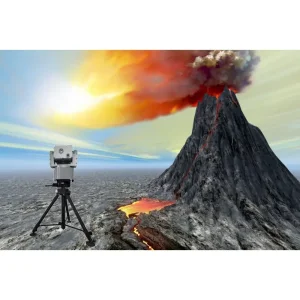
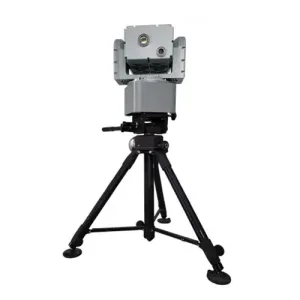
The global landscape for Blister Agents Remote Sensing Systems has transitioned from niche military applications to essential industrial and civil defense infrastructure. Blister agents, such as Sulfur Mustard (HD) and Lewisite (L), remain some of the most persistent and dangerous chemical threats. In 2024, the commercial and industrial demand for remote sensing—or "stand-off" detection—is surging. Unlike traditional contact sensors that require physical interaction with the chemical cloud, remote sensing systems utilize Fourier Transform Infrared (FTIR) and telemetry imaging to identify toxic clouds from kilometers away.
Major global players are increasingly focusing on the integration of these systems into smart city "early warning" networks. In Europe and North America, the focus is on protecting high-traffic urban centers and transport hubs. However, the industrial application is equally vital. Petrochemical giants now use these systems to monitor perimeter safety, ensuring that any accidental release of corrosive or toxic precursors is detected before reaching human populations. This technology is no longer just a "war-time" tool; it is a high-tech insurance policy for modern industrial safety.
Modern systems utilize deep learning algorithms to distinguish between harmless atmospheric compounds and toxic blister agents, reducing false alarm rates to nearly zero.
Current trends move toward passive detection ranges exceeding 5km, allowing authorities to evacuate zones long before a gas cloud reaches the perimeter.
Real-time data streaming to centralized command centers enables a synchronized response across multiple agencies during a chemical emergency.
The Middle East presents a unique set of challenges and requirements for Blister Agent Remote Sensing. The regional climate, characterized by extreme heat, high UV radiation, and frequent sandstorms, demands hardware that is both ruggedized and thermally regulated. Standard sensors often fail in ambient temperatures exceeding 50°C; therefore, our systems are designed with specialized cooling and filtration to maintain high precision in desert environments.
From a strategic perspective, the Middle East is a global hub for the oil and gas industry. Refineries and storage facilities are potential targets for sabotage or operational accidents involving hazardous gases. Implementing a **Remote Sensing System** allows for 24/7 monitoring of vast pipeline networks and industrial zones where manual patrolling is impossible. Furthermore, localized geopolitical sensitivities require systems that can be integrated into national border security frameworks to prevent the illicit movement of chemical precursors.
As a leading Chinese national high-tech enterprise, we provide a distinct competitive advantage in the global market for gas detection instruments. Our "Source Factory" model ensures that we control the entire lifecycle of the product—from core sensor R&D to final assembly. This leads to several key benefits for our international clients:
Minnit is a national high-tech enterprise focusing on the research and development and industrialized innovative application of precision gas detection instruments. The company uses technological innovation to realize on-site, automated and intelligent analysis, detection and monitoring, and is committed to becoming the world's leading manufacturer of scientific instruments.
We have mastered relatively complete gas analysis and detection technologies such as electrochemistry, PID, and spectroscopy. Our product portfolio spans laboratory analysis, on-site analysis (portable, online, mobile), and automated analysis. We provide global users with comprehensive and professional solutions in the fields of advanced industry, ecological environment, emergency safety, and defense. Our dedication to E-E-A-T principles—Experience, Expertise, Authoritativeness, and Trustworthiness—is reflected in our ISO certifications and the rigorous testing our equipment undergoes to meet international safety standards.
Global procurement trends for blister agent detection are moving toward integrated sensing networks. Governments and private entities are no longer looking for standalone devices; they want systems that talk to each other. We are seeing a significant increase in demand from the following sectors:
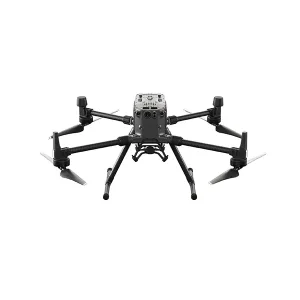
The future of the industry lies in Miniaturization and Multispectral Imaging. We are currently developing the next generation of sensors that are light enough to be mounted on small UAVs (Drones), allowing for aerial remote sensing of hazardous zones without putting human pilots at risk. This is the new frontier of chemical safety.