 Airppb
Airppb
Airppb
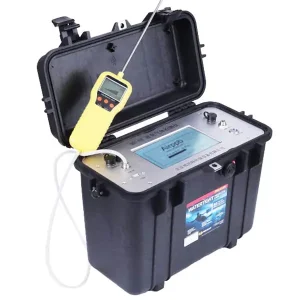
In the modern era of asymmetrical warfare and complex industrial hazards, the Military Chemical Gas Detector has evolved from a simple niche safety tool into a critical pillar of national security and industrial defense. Known globally as CBRN (Chemical, Biological, Radiological, and Nuclear) defense equipment, these instruments are designed to detect Toxic Industrial Chemicals (TICs) and Chemical Warfare Agents (CWAs) such as Nerve, Blister, Blood, and Choking agents.
The global business landscape for chemical gas detection is currently experiencing a CAGR of over 6.5%. This growth is driven by increasing geopolitical tensions, stringent environmental regulations, and the rising need for "Zero-Trust" safety protocols in the petroleum, petrochemical, and defense sectors. Major world powers are prioritizing the integration of Remote Sensing Technology and Handheld IMS (Ion Mobility Spectrometry) to ensure soldiers and first responders are protected from invisible threats before they become lethal.
Designed to survive extreme environments, from arctic tundras to desert warfare, meeting MIL-STD-810G standards.
Utilizing Ion Mobility Spectrometry (IMS) and FTIR to distinguish between harmful agents and common interferents.
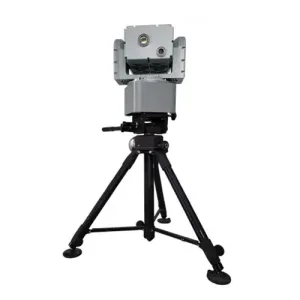
Advanced telemetry imaging systems capable of monitoring gas clouds from several kilometers away in real-time.
The chemical gas detector industry is undergoing a digital transformation. We have identified four key trends shaping the future of the market:
Global procurement requirements for chemical gas detectors vary significantly by region and industry:
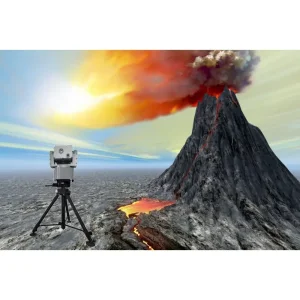
The Middle East: High demand for Volcanic Gas Monitoring and Petrochemical Security. Due to the harsh heat and sand, procurement focuses on "Desert-Hardened" instruments like the MR-ACT series, which are used for both civil defense and oil refinery safety.
Europe & Russia: Emphasis on Telemetry Imaging and emergency response. In Russia, the focus is often on early warning systems for industrial chemical leaks and border security, requiring high-precision imaging systems like the MR-ACT Gas Telemetry.
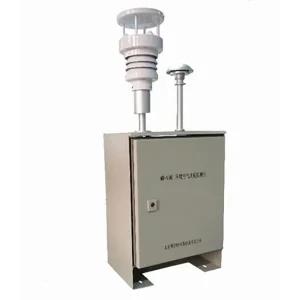
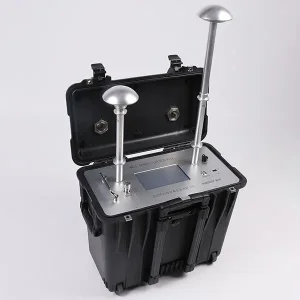
Industrial Safety (Petroleum & Petrochemical): Procurement here is driven by air quality standards. The MR-A(M) Ambient Air Quality Monitor is a staple for refineries to ensure that volatile organic compounds (VOCs) do not exceed legal limits, protecting both the workers and the surrounding environment.
Minnit is a national high-tech enterprise focusing on the research and development and industrialized innovative application of precision gas detection instruments. Our position as a leading Chinese manufacturer offers unique advantages to the global market:
We have mastered complete gas analysis technologies including Electrochemistry, PID (Photoionization), and Spectroscopy (FTIR/IMS). We don't just assemble; we innovate at the sensor level.
Our production lines are optimized for high-volume, high-precision assembly, allowing us to offer laboratory-grade instruments at industrial scales with significantly reduced lead times.
From portable on-site analysis to mobile automated stations, we provide global users with comprehensive solutions in advanced industry, ecological environment, and emergency safety.
"We are committed to becoming the world's leading manufacturer of scientific instruments, using technological innovation to realize on-site, automated, and intelligent monitoring."
Instruments like our MR-FAT utilize the unique infrared "fingerprint" of gas molecules. By analyzing the absorption spectrum of infrared light passing through a gas cloud, the system can identify and quantify hundreds of different gases simultaneously from a distance of several kilometers. This is essential for Environmental Protection Industry monitoring and large-scale military base security.
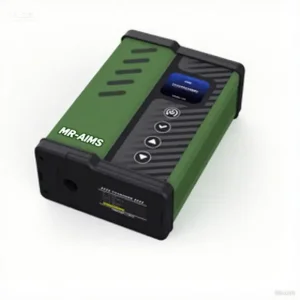
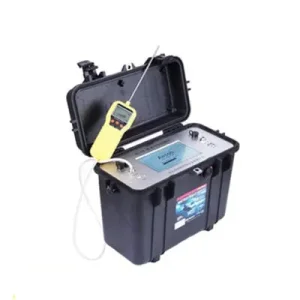
The MR-AIMS Handheld Identifier uses IMS technology to track the movement of ions in an electric field. Since different chemicals have different ion mobility, the device can identify CWAs and TICs in seconds with extremely low detection limits (parts per billion). This is the gold standard for "First In" emergency response teams.
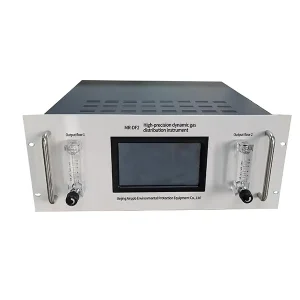
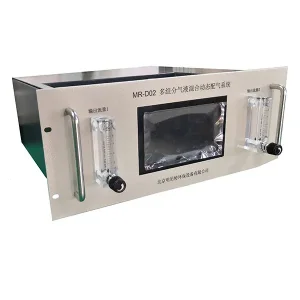
To ensure all detectors are accurate, they must be calibrated. Our MR-DF2 and MR-DF3 systems allow for the high-precision mixing of gases, creating standard concentrations for the rigorous testing of other detection equipment—a vital tool for labs and military maintenance depots.
When evaluating the Brand & Ranking of military chemical gas detectors, experts prioritize three metrics: Detection Sensitivity, Operational Versatility, and Data Integrity. Minnit’s product lineup consistently ranks at the top for industrial and military procurement due to our rigorous adherence to global quality standards and our constant pursuit of spectroscopic breakthroughs.
Whether it is the MR-AX Multi-Gas Detector capable of measuring dozens of gases in complex firefighting scenarios, or the MR-ACT systems providing early warnings in volcanic or industrial zones, our instruments represent the pinnacle of modern gas analysis. As we look toward the future, Minnit remains dedicated to protecting lives through the power of precision science and innovative engineering.