 Airppb
Airppb
Airppb
In an era of increasing industrial complexity and geopolitical sensitivity, the demand for Firefighting Chemical Warfare Agent Telemeters has transitioned from niche military applications to essential civilian emergency response infrastructure. These sophisticated instruments, often utilizing Fourier Transform Infrared (FTIR) or Ion Mobility Spectrometry (IMS), allow first responders to detect, identify, and quantify hazardous chemical clouds from a safe distance—often up to several kilometers away.
Identify lethal agents like Sarin, VX, and Mustard Gas from distances of 1-5km, ensuring personnel safety during initial reconnaissance.
Simultaneous monitoring of Chemical Warfare Agents (CWAs) and Toxic Industrial Chemicals (TICs) in real-time.
Advanced algorithms reduce false alarms by distinguishing between hazardous plumes and common environmental interference like smoke or humidity.
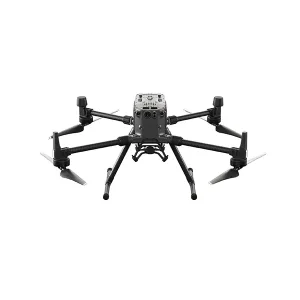
Historically, chemical analysis required physical sampling, which placed firefighters in extreme danger. The current industry trend is moving toward miniaturization and hyper-connectivity. Modern manufacturers are now integrating telemetry data with GIS (Geographic Information Systems) and drone-mounted sensors to create a 3D visualization of chemical threats. This "Digital Twin" of a disaster site allows commanders to make data-driven evacuation decisions in seconds.
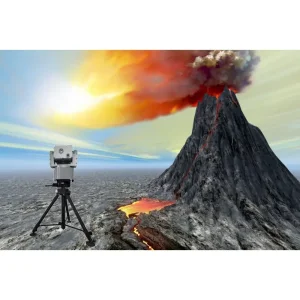
Global procurement for CWA telemeters is surging, particularly in the Middle East, Russia, and Southeast Asia. In the Middle East, the focus is on protecting critical oil and gas infrastructure from sabotage and monitoring volcanic activity. In Russia and Eastern Europe, there is a high demand for ruggedized, cold-weather-resistant telemetry imaging systems. Meanwhile, urban centers in Asia are investing in handheld IMS identifiers for rapid subway and public event security.
Gases Detectable
Detection Range
Response Time
Autonomous Monitoring
As a leading Chinese national high-tech enterprise, Minnit represents the pinnacle of innovative application in precision gas detection. Our advantages include:
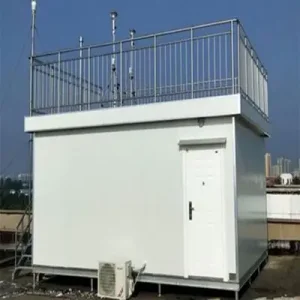
Our telemeters are deployed in diverse environments:
Minnit is a national high-tech enterprise focusing on the research and development and industrialized innovative application of precision gas detection instruments. The company uses technological innovation to realize on-site, automated and intelligent analysis, detection and monitoring, and is committed to becoming the world's leading manufacturer of scientific instruments. It has mastered relatively complete gas analysis and detection technologies such as electrochemistry, PID, and spectroscopy, and developed laboratory Analysis, on-site analysis (portable, online, mobile), automated analysis and a series of technologically leading product portfolios provide global users with comprehensive and professional solutions in the fields of advanced industry, ecological environment emergency safety and other fields.
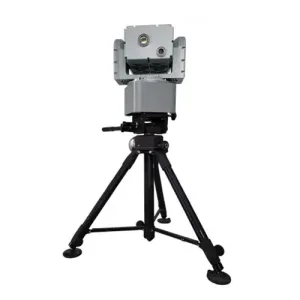
When evaluating a Firefighting Chemical Warfare Agent Telemeter Manufacturer, technical specifications are paramount. Our MR-FAT series utilizes passive infrared remote sensing technology. Unlike active systems, it does not require a reflector, making it ideal for unpredictable emergency scenes. It can identify chemical clouds by analyzing the infrared radiation characteristics of the target gas against the background.
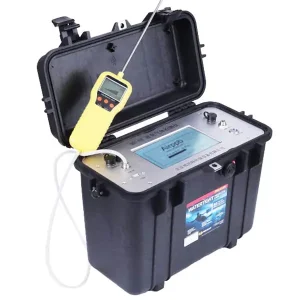
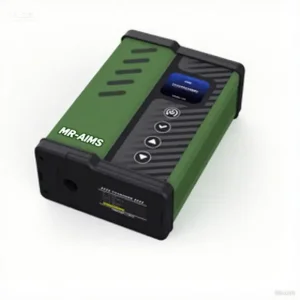
Furthermore, our MR-AIMS Handheld IMS Identifier provides a secondary layer of verification. While the telemeter provides standoff distance, the handheld IMS offers point detection with sensitivity in the parts-per-billion (ppb) range. This dual-layer approach is the current gold standard for international CBRNE (Chemical, Biological, Radiological, Nuclear, and Explosives) response teams.
In conclusion, as the global landscape for safety and security evolves, Minnit remains at the forefront, providing the tools necessary to detect the invisible and protect the brave. Whether for volcanic monitoring in the Middle East or industrial safety in the heart of Europe, our precision instruments are the first line of defense against chemical threats.