 Airppb
Airppb
Airppb
In the modern industrial landscape, the precision of Emergency Gas Mixture Dilution has become a cornerstone of safety and operational excellence. Globally, the demand for dynamic gas distribution instruments is surging, driven by rigorous environmental regulations and the critical need for accurate sensor calibration in hazardous environments.
From the high-tech laboratories of North America to the sprawling petrochemical complexes in the Middle East and the burgeoning industrial zones in Asia, precision gas dilution is no longer just a luxury—it is a mandatory requirement. Industries such as semiconductor manufacturing, aerospace, and defense rely on these systems to create stable, traceable gas standards for monitoring toxic and combustible gases.
Current rankings of global manufacturers emphasize not only technical precision but also the ability to provide emergency response capabilities. When a gas leak occurs or an environmental disaster strikes, the ability to rapidly deploy portable, high-precision dilution meters for field verification is the difference between a controlled situation and a catastrophe.
The industry is shifting from manual rotameters to AI-driven, automated dynamic distribution systems. Modern instruments now feature self-diagnostic capabilities and remote cloud monitoring, ensuring that gas mixture dilution is consistent regardless of environmental fluctuations.
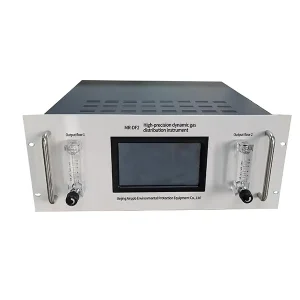
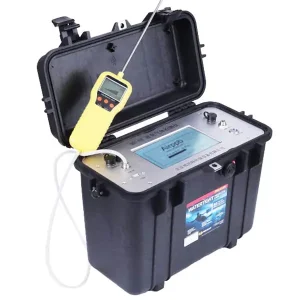
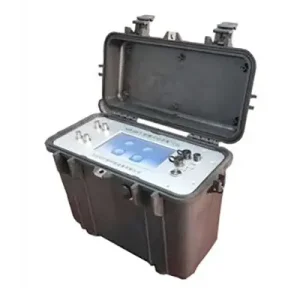
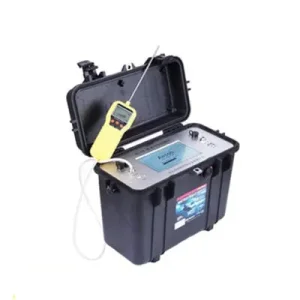
There is a massive trend toward "Lab-on-the-go." Emergency responders require devices like the MR-DF3 that offer laboratory-grade precision in a rugged, handheld form factor suitable for harsh field conditions.
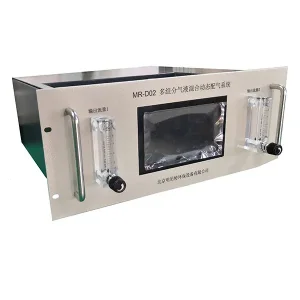
Modern industrial needs often involve complex "cocktails" of gases. The demand for instruments capable of mixing 10+ components simultaneously with high-precision mass flow controllers (MFC) is reaching an all-time high.
Global procurement teams in the environmental protection, military, and petrochemical sectors are increasingly prioritizing "Reliability" and "Traceability." Key factors in current procurement cycles include:
Applied in high-temperature, sandy environments for H2S and VOC monitoring stations, ensuring the safety of oil field personnel and environmental compliance in refinery zones.
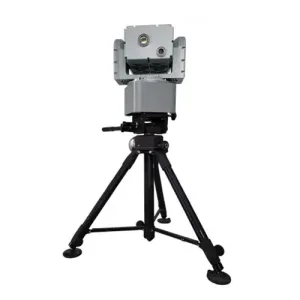
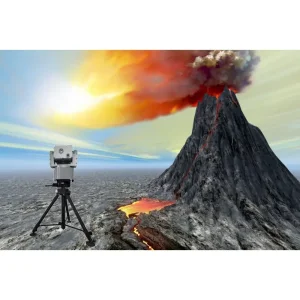
Utilizing gas telemetry imaging systems (like MR-ACT) to monitor pipelines in sub-zero temperatures where traditional contact sensors fail.
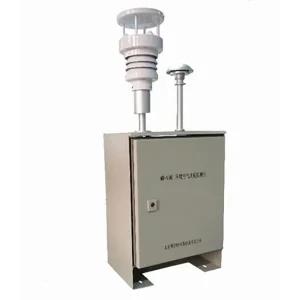
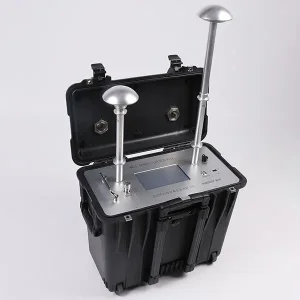
Deploying micro air stations (MR-A(M)) to provide real-time data on PM2.5, SO2, and NOx levels in rapidly industrializing metropolitan areas.
As a leading Chinese National High-Tech Enterprise, we combine the efficiency of advanced manufacturing with world-class R&D. Our position as a premier manufacturer offers unique benefits:
Minnit is a national high-tech enterprise focusing on the research and development and industrialized innovative application of precision gas detection instruments. The company uses technological innovation to realize on-site, automated and intelligent analysis, detection and monitoring, and is committed to becoming the world's leading manufacturer of scientific instruments.
It has mastered relatively complete gas analysis and detection technologies such as electrochemistry, PID, and spectroscopy, and developed laboratory Analysis, on-site analysis (portable, online, mobile), automated analysis and a series of technologically leading product portfolios provide global users with comprehensive and professional solutions in the fields of advanced industry, ecological environment emergency safety and other fields.
Our expertise is grounded in decades of field experience. The Emergency Gas Mixture Dilution instruments we manufacture are engineered to handle the most volatile substances. By utilizing Fourier Transform Infrared (FTIR) technology and Ion Mobility Spectrometry (IMS), we provide identifiers that can pinpoint chemical threats in seconds—a critical factor for military and emergency response rankings.
High-sensitivity detection for thousands of VOCs and toxic gases with ppb-level resolution.
Thermal mass flow controllers ensure that dilution ratios remain stable even with fluctuating input pressures.
Gas telemetry imaging allows for visualized monitoring of gas clouds from several kilometers away, protecting operators from exposure.