 Airppb
Airppb
Airppb
The global energy landscape is undergoing a significant transformation, with Liquefied Petroleum Gas (LPG) playing a pivotal role as a cleaner alternative to traditional heavy fossil fuels. As industrialization accelerates in emerging markets and the Middle East continues to dominate energy exports, the demand for sophisticated Liquefied Petroleum Gas Concentration Detectors has reached an all-time high. In the current global commercial climate, safety is no longer a luxury—it is a mandatory operational requirement. From massive refineries in Saudi Arabia to residential distribution networks in Europe, the ability to detect LPG leaks at the ppm (parts per million) level is critical for preventing catastrophic incidents.
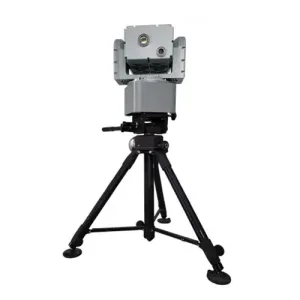
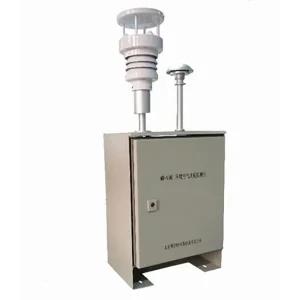
Currently, the market is shifting from simple alarm systems to integrated Gas Telemetry and Imaging Systems. These advanced solutions allow for 24/7 autonomous monitoring of vast industrial complexes. Global enterprises are no longer looking for just a "sensor"; they are seeking comprehensive monitoring ecosystems that include cloud-based data logging, AI-driven predictive maintenance, and explosion-proof hardware that can withstand extreme environmental conditions.
The rise of Industry 4.0 has made wireless gas detection the new standard, allowing real-time data transmission to centralized control rooms without the need for extensive cabling.
Moving beyond basic electrochemical sensors, advanced manufacturers are utilizing Photoionization Detection (PID) and Laser Spectroscopy for faster, more accurate LPG identification.
Modern detectors now feature AI algorithms that can distinguish between atmospheric interference and actual hazardous gas leaks, significantly reducing false alarms.
The Middle East represents the world's most demanding environment for gas detection technology. With ambient temperatures frequently exceeding 50°C and high concentrations of airborne sand and salinity, standard equipment often fails. As a leading Middle East Liquefied Petroleum Gas Concentration Detector Manufacturer, our R&D team has focused specifically on "Harsh Environment Tolerance."
In regions like the UAE, Qatar, and Saudi Arabia, LPG is not only an export product but also a vital energy source for desalination plants, power generation, and residential heating/cooking. Localized application scenarios include:
When global procurement officers evaluate LPG detection brands, they focus on three core pillars: Compliance (ATEX/IECEx/SIL), Longevity, and Cost-to-Performance ratio. Our manufacturing facility in China addresses these needs by combining high-end European sensor technology with efficient Chinese production workflows. This allows global enterprises to procure Tier-1 safety equipment at a price point that facilitates large-scale deployment.
Our facility utilizes automated production lines for sensor calibration, ensuring every unit meets the strictest international safety standards before shipping.
We hold dozens of patents in spectroscopy and electrochemical detection, allowing us to customize solutions for specific industrial gases beyond just LPG.
Located in a major industrial hub, we offer rapid shipping and localized technical support across the Middle East, Europe, and Asia.
As a national high-tech enterprise, we don't just sell products; we provide "Industrial Security Assurance." Our expertise in Fourier Transform Infrared (FTIR) and IMS Chemical Identification allows us to serve not only the LPG industry but also military, environmental protection, and firefighting sectors. By choosing a specialized Chinese manufacturer, global clients benefit from a rapid innovation cycle—we can take a client's specific environmental challenge and develop a customized sensor profile in a fraction of the time required by traditional western brands.
Minnit is a national high-tech enterprise focusing on the research and development and industrialized innovative application of precision gas detection instruments. The company uses technological innovation to realize on-site, automated and intelligent analysis, detection and monitoring, and is committed to becoming the world's leading manufacturer of scientific instruments. It has mastered relatively complete gas analysis and detection technologies such as electrochemistry, PID, and spectroscopy, and developed laboratory Analysis, on-site analysis (portable, online, mobile), automated analysis and a series of technologically leading product portfolios provide global users with comprehensive and professional solutions in the fields of advanced industry, ecological environment emergency safety and other fields.