 Airppb
Airppb
Airppb
Precision instruments for high-stakes environmental and industrial safety.
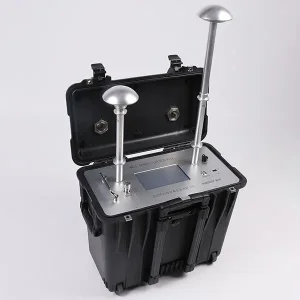
In the current global industrial landscape, the demand for Long-Distance Toxic Gas Monitoring has transitioned from a regulatory "check-box" to a critical operational necessity. As heavy industries such as petroleum, petrochemicals, and mining expand into more remote and hazardous environments, the ability to detect toxic leakages from a distance is paramount for protecting personnel and the surrounding ecosystem.
From the vast oil fields of the Middle East to the industrial corridors of Russia and North America, the integration of Fourier Transform Infrared (FTIR) and Laser-based telemetry is setting new benchmarks. These technologies allow for the identification of hundreds of gas species simultaneously over distances of several kilometers, providing an early warning system that point-detectors simply cannot match.
Modern systems are no longer just sensors; they are intelligent nodes. AI algorithms now filter out "noise" from environmental factors, reducing false alarms and identifying gas plumes with 99% accuracy through spectral imaging.
Real-time data streaming to centralized command centers allows for global oversight of multiple sites. Cloud-based analytics provide predictive maintenance alerts for the sensors themselves, ensuring zero downtime.
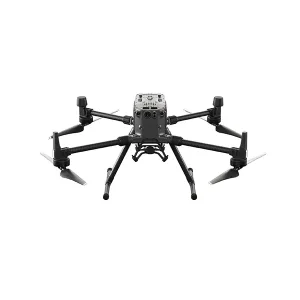
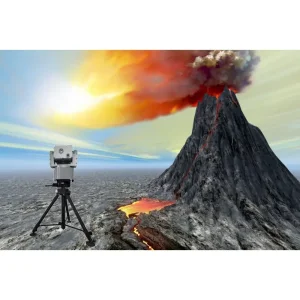
The trend is moving toward mobility. Mounting long-distance telemeters on drones allows for rapid response in emergency scenarios, such as volcanic eruptions or chemical warehouse fires, where human access is impossible.
Global procurement teams in the environmental protection sector are increasingly looking for integrated solutions rather than standalone hardware. The shift is toward "Detection-as-a-Service," where the reliability of the data is as important as the instrument itself.
As a leading Chinese national high-tech enterprise, we offer a unique blend of innovation, scale, and cost-efficiency. Our R&D center focuses on the industrialized application of precision gas detection, ensuring that our products meet international standards (CE, Ex, ISO) while remaining competitive in the global market.
Our "Minnit" brand represents the pinnacle of Chinese scientific instrument manufacturing. We don't just assemble; we own the core technologies—from Electrochemical sensors to PID and Spectroscopy. This vertical integration allows us to provide rapid customization for specific industrial needs, a feat rarely matched by Western counterparts.
Minnit is a national high-tech enterprise focusing on the research and development and industrialized innovative application of precision gas detection instruments. The company uses technological innovation to realize on-site, automated and intelligent analysis, detection and monitoring, and is committed to becoming the world's leading manufacturer of scientific instruments. It has mastered relatively complete gas analysis and detection technologies such as electrochemistry, PID, and spectroscopy, and developed laboratory Analysis, on-site analysis (portable, online, mobile), automated analysis and a series of technologically leading product portfolios provide global users with comprehensive and professional solutions in the fields of advanced industry, ecological environment emergency safety and other fields.
Advanced instrumentation for niche environmental and security applications.
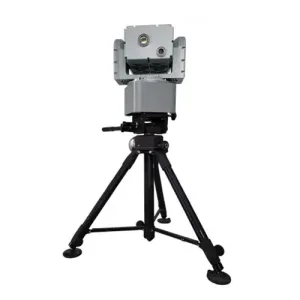
Long-distance toxic gas monitoring is a sophisticated field that combines physics, chemistry, and high-speed data processing. At the heart of our most advanced systems, like the MR-FAT Fourier Transform Infrared Telemeter, lies the principle of infrared absorption. Every gas molecule has a unique "fingerprint" in the infrared spectrum. By projecting an infrared beam or analyzing ambient infrared radiation, our systems can identify these fingerprints over distances exceeding 5 kilometers.
Traditional point detectors require the gas to physically come into contact with the sensor. In a large-scale chemical plant, a leak might occur hundreds of meters away from the nearest sensor, delayed by wind direction and obstacles. Telemetry imaging systems, such as the MR-ACT, provide a "visual" map of the gas cloud. This allows safety officers to see the size, concentration, and movement direction of a leak in real-time, enabling precise evacuation and containment strategies.
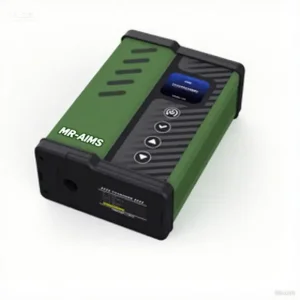
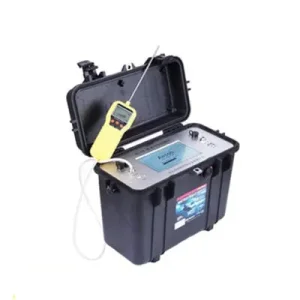
In military scenarios, the MR-AX Multi-Gas Detector and MR-AIMS Handheld IMS Chemical Identifier are indispensable. Ion Mobility Spectrometry (IMS) allows for the detection of chemical warfare agents and toxic industrial chemicals at extremely low concentrations (parts per billion). These devices are designed for ruggedness, ensuring they operate in the most hostile environments, from combat zones to disaster relief sites.
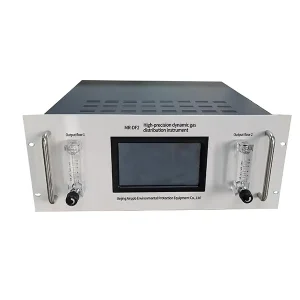
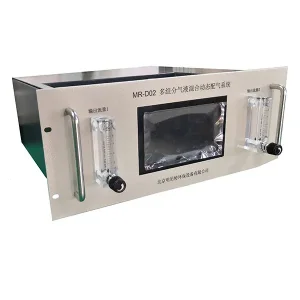
To maintain the accuracy of these high-precision instruments, calibration is key. Our MR-DF2 and MR-DF3 Dynamic Gas Distribution Instruments are the "gold standard" for creating precise gas mixtures. These are used by environmental protection agencies and laboratory researchers to calibrate sensors, ensuring that the data reported to governments and international bodies is indisputable. High-precision gas distribution is the foundation of any reliable monitoring network.
Beyond toxic gases, the identification of odor-causing compounds is a growing concern for urban municipalities. The MR-AX Odor Gas Detector uses advanced sensor arrays to mimic the human olfactory system but with the precision of a machine. This is vital for waste management sites, sewage treatment plants, and industrial zones located near residential areas, helping to maintain the quality of life and comply with local environmental regulations.