 Airppb
Airppb
Airppb
In an era of increasing geopolitical complexity and industrial expansion, the demand for Emergency Nerve Agent Telemetry Detectors has reached unprecedented levels. These systems are no longer just military assets; they are essential components of national security, urban safety, and high-risk industrial monitoring.
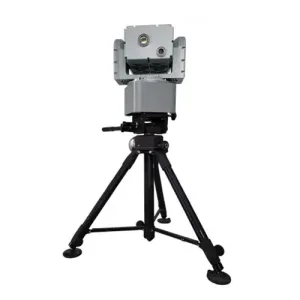
Unlike traditional point detectors that require physical contact with a gas cloud, telemetry imaging systems utilize advanced spectroscopy (such as FTIR) to identify and quantify hazardous substances from distances of several kilometers. This "standoff" capability is the gold standard for protecting first responders and civilian populations during chemical emergencies.
Staying ahead of emerging threats with cutting-edge innovations.
Modern detectors use machine learning algorithms to filter out background noise and interference, ensuring zero false positives in complex urban or industrial environments.
Combining infrared telemetry with visual imaging allows operators to "see" the gas cloud, its concentration, and its movement direction in real-time.
Data is instantly transmitted to command centers worldwide, enabling remote expert analysis and coordinated emergency response across borders.
Procurement needs vary by region, and our brand has established a dominant ranking by addressing specific localized challenges:
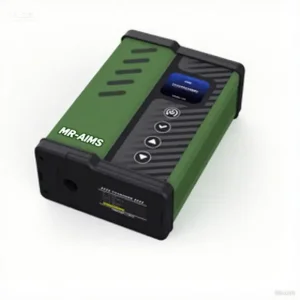
Global buyers prioritize Reliability, Speed of Detection, and Ease of Integration. Our MR-series instruments meet stringent military and industrial standards, providing a seamless interface with existing GIS (Geographic Information Systems) and emergency protocols.
Minnit is a national high-tech enterprise focusing on the research and development and industrialized innovative application of precision gas detection instruments. The company uses technological innovation to realize on-site, automated and intelligent analysis, detection and monitoring, and is committed to becoming the world's leading manufacturer of scientific instruments.
It has mastered relatively complete gas analysis and detection technologies such as electrochemistry, PID, and spectroscopy, and developed laboratory Analysis, on-site analysis (portable, online, mobile), automated analysis and a series of technologically leading product portfolios provide global users with comprehensive and professional solutions in the fields of advanced industry, ecological environment emergency safety and other fields.
As a leading Chinese factory, we offer unparalleled supply chain efficiency, rapid R&D cycles, and cost-effective solutions without compromising on the "High-Tech" precision required for nerve agent detection.
Explore our full range of high-precision gas analysis instruments.
Standoff detection is the ability to identify chemical warfare agents (CWAs) or toxic industrial chemicals (TICs) from a distance. The MR-ACT series utilizes Passive Fourier Transform Infrared (FTIR) spectroscopy. Every gas molecule has a unique "fingerprint" in the infrared spectrum. By analyzing the ambient infrared radiation, our telemetry systems can identify these fingerprints against the background, even at low concentrations.
During a chemical release—whether accidental or intentional—the first few minutes are critical. Traditional point detectors require a person or a drone to enter the potentially lethal plume. Telemetry imaging allows for:
When evaluating the ranking of Nerve Agent Telemetry Detector brands, several key metrics are used by international procurement agencies:
The next generation of telemetry detectors will be permanently installed in "Smart City" grids. These sensors will act as a silent shield, constantly scanning the horizon for any chemical anomalies. Minnit is at the forefront of this movement, developing low-power, high-durability sensors that can be integrated into urban infrastructure, providing 24/7 protection for millions.