 Airppb
Airppb
Airppb
Advanced Remote Sensing and Detection Instruments
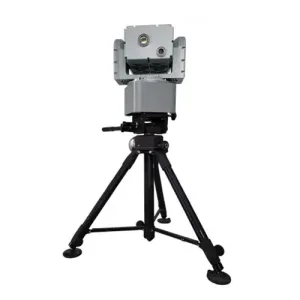
The Passive Fourier Infrared Telemeter (PFIT) represents the pinnacle of remote gas sensing technology. Unlike active systems that require a laser or infrared source to be reflected back, passive systems utilize the natural thermal radiation contrast between the target gas cloud and the background environment. By employing a high-precision Michelson interferometer, our instruments capture the "fingerprint" of complex gas molecules across long distances, often exceeding several kilometers.
As a leading National High-Tech Enterprise, Minnit has pioneered the miniaturization and industrial application of these systems. Our technology integrates Fourier Transform Infrared (FTIR) spectroscopy, allowing for the simultaneous detection of hundreds of volatile organic compounds (VOCs), greenhouse gases, and hazardous chemicals with a single scan. This capability is essential for modern environmental protection agencies and industrial safety managers who require non-contact, real-time monitoring of large-scale facilities.
Our PFIT systems offer resolution down to 0.5 cm⁻¹, ensuring precise identification of overlapping gas species in complex industrial atmospheres.
Detect and quantify gas leaks from up to 5km away, providing a crucial safety buffer for emergency responders and refinery operators.
Automated spectral library matching using AI algorithms reduces false positives and delivers instant concentration heatmaps.
The global environmental monitoring market is shifting toward intelligent, autonomous sensing. With the rise of ESG (Environmental, Social, and Governance) mandates, industries are no longer satisfied with point-source detectors. The demand is moving toward scanning systems that cover entire petrochemical parks or urban districts.
Annual CAGR
Market Value
*Estimated growth for the remote gas sensing sector by 2028.
In the Middle East and Russia, large-scale refineries use our MR-ACT Gas Telemetry Imaging systems to monitor "invisible" methane leaks. This prevents catastrophic explosions and ensures compliance with international methane reduction pledges.
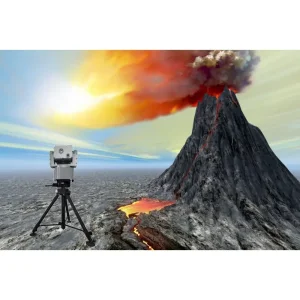
Volcanic gas monitoring (SO2, CO2, HCl) is critical for early warning. Our remote systems allow volcanologists to collect data from safe distances, providing real-time flux measurements that save lives.
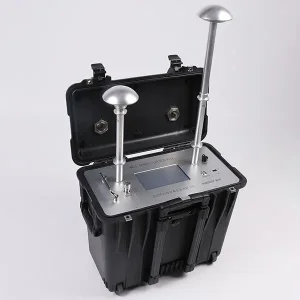
Firefighting and hazmat teams utilize the MR-AX Odor Gas Detector to identify toxic plumes in minutes. Its ability to categorize unknown odors makes it indispensable for urban emergency safety.
Military-grade high-precision gas distribution and detection ensure preparedness against chemical threats, with high-accuracy calibration through our MR-DF3 series.
Minnit integrates research, development, and industrialization. We iterate our optical designs faster than traditional western manufacturers, ensuring you have the latest sensor technology.
By owning the core technologies in electrochemistry, PID, and spectroscopy, we provide more cost-effective solutions without compromising on laboratory-grade precision.
Our instruments are designed to meet and exceed global environmental standards, providing professional solutions for advanced industrial and ecological emergency safety.
Minnit is a national high-tech enterprise focusing on the research and development and industrialized innovative application of precision gas detection instruments. The company uses technological innovation to realize on-site, automated and intelligent analysis, detection and monitoring, and is committed to becoming the world's leading manufacturer of scientific instruments. It has mastered relatively complete gas analysis and detection technologies such as electrochemistry, PID, and spectroscopy, and developed laboratory Analysis, on-site analysis (portable, online, mobile), automated analysis and a series of technologically leading product portfolios provide global users with comprehensive and professional solutions in the fields of advanced industry, ecological environment emergency safety and other fields.
Reliable Instrumentation for Diverse Environmental Needs