 Airppb
Airppb
Airppb
In the high-stakes world of the petrochemical industry, the detection of flammable and toxic gases is not just a regulatory requirement; it is the fundamental pillar of operational safety. Globally, the demand for sophisticated Petrochemical Flammable Gas And Toxic Gas Detection systems has reached an all-time high, driven by stringent environmental laws, the expansion of downstream refining capacities, and a renewed focus on workplace safety.
From the vast oil fields of the Middle East to the complex refineries in North America and Asia, the transition toward Industrial IoT (IIoT) and smart sensing is transforming how companies monitor their facilities. As a leading manufacturer, Minnit provides the technological edge needed to navigate this hazardous environment with precision and reliability.
Minnit is a national high-tech enterprise focusing on the research and development and industrialized innovative application of precision gas detection instruments. The company uses technological innovation to realize on-site, automated and intelligent analysis, detection and monitoring, and is committed to becoming the world's leading manufacturer of scientific instruments.
We have mastered relatively complete gas analysis and detection technologies such as electrochemistry, PID, and spectroscopy, providing global users with comprehensive and professional solutions in advanced industry, ecological environment, and emergency safety.
Gas Types Detected
Safety Compliance
Real-time Monitoring
Response Time
The Middle East presents unique challenges for gas detection technology. Extreme temperatures, high humidity in coastal regions, and the pervasive presence of sand and dust require hardware that is not only accurate but incredibly durable. Our specialized Middle East Petrochemical Flammable Gas And Toxic Gas Detection products are engineered to withstand these "Desert Conditions."
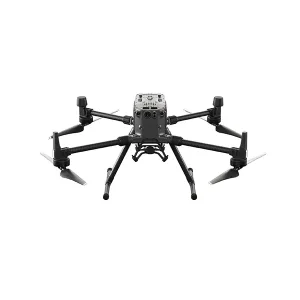
In regions like Saudi Arabia, the UAE, and Qatar, the focus is shifting towards preventative maintenance and early warning systems. Our handheld IMS chemical identifiers and telemetry imaging systems allow for the detection of leaks from a safe distance, minimizing personnel exposure to H2S, Benzene, and other volatile organic compounds (VOCs).
Leading the shift from reactive to proactive gas safety management.
Advanced Ion Mobility Spectrometry (IMS) and Fourier Transform Infrared (FTIR) technologies allow for the identification of complex chemical fingerprints, not just simple gas concentrations.
Our instruments utilize AI algorithms to filter out false alarms caused by environmental interference, ensuring that safety teams only respond to genuine threats.
Data is no longer siloed in the field. Real-time telemetry sends data to centralized command centers, enabling enterprise-wide safety visibility.
Choosing Minnit means partnering with a manufacturer that balances cutting-edge innovation with supply chain efficiency. As a national high-tech enterprise, we leverage China's advanced manufacturing ecosystem to deliver superior value.
We understand the complexities of global procurement. Our logistics and support teams are experienced in international shipping, customs compliance, and providing remote technical support to petrochemical giants worldwide.
Continuous monitoring of methane (CH4) and H2S in distillation units and storage tank farms.
Detecting trace amounts of toxic chemicals during specialized synthesis and polymerization.
Fence-line monitoring to ensure that toxic emissions do not impact surrounding communities.
Rapid identification of unknown gases during accidental spills or industrial fires using portable IMS units.
The field of Petrochemical Flammable Gas And Toxic Gas Detection is evolving beyond simple alarm systems. Modern industrial facilities require a layered defense strategy. This starts with fixed-point detectors for continuous surveillance of known high-risk zones, followed by portable gas detectors for personnel protection during maintenance activities. However, the most significant advancement lies in remote sensing and imaging.
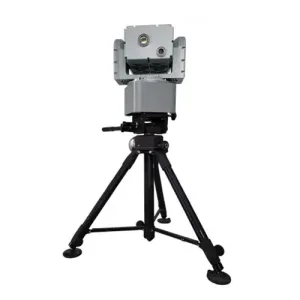
Our MR-FAT Fourier Transform Infrared (FTIR) Telemeter and MR-ACT Gas Telemetry Imaging systems represent the pinnacle of this technology. Unlike traditional sensors that require gas to come in physical contact with a probe, these systems use light to "see" gas clouds from kilometers away. In a large-scale Middle East petrochemical complex, this allows operators to identify a leak in a pipeline before it becomes a catastrophic fire hazard. The ability to visualize a gas plume—knowing its size, concentration, and direction of travel—is invaluable for emergency safety and evacuation planning.
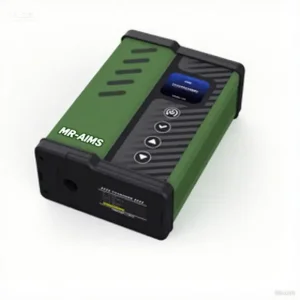
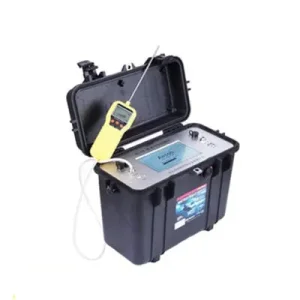
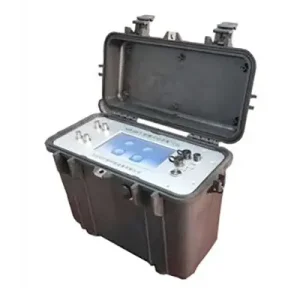
For chemical identification, the MR-AIMS Handheld IMS Chemical Identifier is a game-changer. It doesn't just tell you that a gas is present; it identifies the specific molecule. This is crucial in environments where multiple toxic chemicals might coexist. Knowing whether a leak is Benzene, Toluene, or a different hydrocarbon changes the medical and tactical response significantly. Our IMS technology is derived from rigorous laboratory standards but packaged for rugged, handheld use in the field.
Reliability is built on compliance. As a manufacturer catering to the global market, our products are designed to meet international standards such as ATEX and IECEx for explosive atmospheres. This "Reliability" (the 'R' in E-E-A-T) ensures that our instruments do not themselves become a source of ignition in volatile environments. Our Commitment to E-E-A-T principles means we don't just sell hardware; we provide a promise of safety backed by years of industrial experience and scientific expertise.
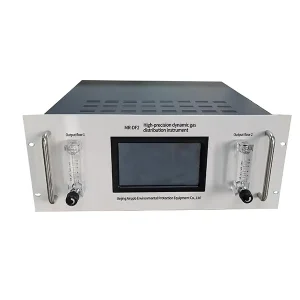
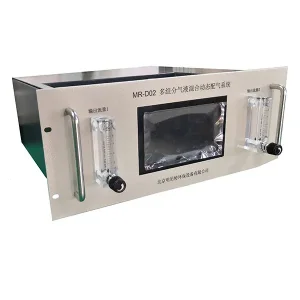
The global push for "Net Zero" and environmental sustainability is placing new burdens on petrochemical companies. Leak Detection and Repair (LDAR) programs are becoming more aggressive. Our high-precision dynamic gas distribution instruments and multi-gas monitors play a critical role here, helping facilities quantify their fugitive emissions and optimize their carbon footprint. By integrating high-precision sensing with automated data logging, Minnit helps companies bridge the gap between industrial production and ecological protection.