 Airppb
Airppb
Airppb
Explore our top-ranked toxic gas detection and monitoring systems.
Understanding the critical role of advanced sensing in modern industry.
The global toxic gas detector market is experiencing a paradigm shift. Driven by stringent occupational health and safety (OHS) regulations and the rising complexity of industrial processes, the demand for real-time, high-precision monitoring has never been higher. From the chemical corridors of Europe to the oil fields of the Middle East, enterprises are moving away from reactive safety to proactive, AI-integrated detection networks.
Modern poison gas detection is no longer just about a simple sensor beep. It involves the integration of Fourier Transform Infrared (FTIR), Ion Mobility Spectrometry (IMS), and Photoionization Detection (PID). These technologies allow for the identification of multi-component gas mixtures at parts-per-billion (ppb) levels, providing a comprehensive safety shield for personnel and assets.
Key sectors including Petroleum, Petrochemical, Mining, and Defense are the primary drivers. As global supply chains become more integrated, the need for standardized, reliable, and "smart" gas detectors that can communicate via IoT (Internet of Things) protocols is becoming the industry benchmark for procurement.
Innovation is the heartbeat of safety. Here is where the industry is heading.
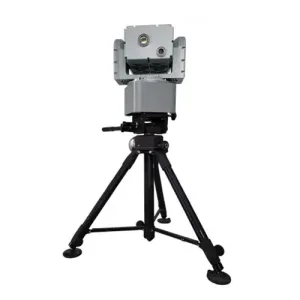
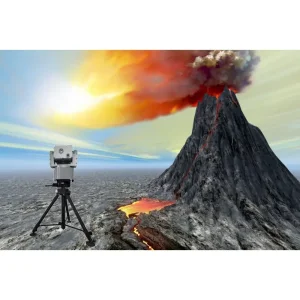
The rise of Gas Telemetry Imaging Early Warning Systems (like our MR-ACT series) allows for the visualization of invisible gas clouds from kilometers away. This trend is crucial for large-scale industrial parks and volcanic monitoring, where physical proximity is dangerous.
Detectors are now equipped with AI algorithms to filter out "false positives" caused by environmental fluctuations. Intelligent odor gas detectors can now identify specific chemical "fingerprints," providing emergency responders with exact data on the toxic threat they face.
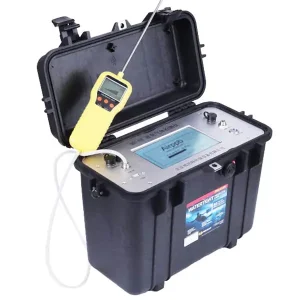
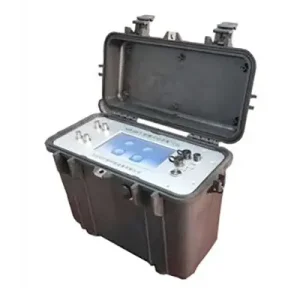
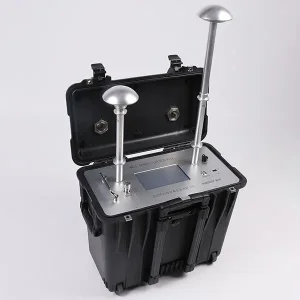
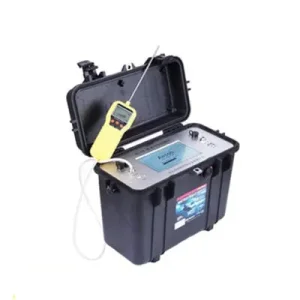
The demand for handheld IMS chemical identifiers and portable dynamic gas distribution meters is surging. Modern workers require wearable or easy-to-carry devices that do not compromise on laboratory-grade precision.
Localized application scenarios for the world's most demanding environments.
In the Middle East, particularly in the GCC countries, the industrial landscape is dominated by massive oil refineries, desalination plants, and burgeoning petrochemical hubs. These environments present unique challenges: high ambient temperatures, sand/dust interference, and the presence of highly corrosive H2S (Hydrogen Sulfide).
Our "Middle East Brand & Ranking" focus highlights the necessity for instruments that are not only precise but "ruggedized" for the desert. Whether it is monitoring volcanic gases in remote regions or ensuring air quality in the smart cities of the future, our technology provides the reliability that Middle Eastern procurement officers demand.
Combining R&D excellence with manufacturing efficiency.
As a national high-tech enterprise, we don't just assemble; we innovate. We have mastered the core physics of electrochemistry, PID, and spectroscopy, allowing us to offer products that rival or exceed traditional Western brands in technical specifications.
By leveraging China's robust industrial supply chain, we provide high-end scientific instruments at a price point that allows for wider deployment across large industrial sites, ensuring safety is never compromised by budget constraints.
Global procurement needs often require bespoke solutions. Our factory capability allows for rapid prototyping and customization of gas distribution instruments and monitoring stations to meet specific local regulatory requirements.
Your Global Partner in Precision Gas Detection.
Minnit is a national high-tech enterprise focusing on the research and development and industrialized innovative application of precision gas detection instruments. The company uses technological innovation to realize on-site, automated and intelligent analysis, detection and monitoring, and is committed to becoming the world's leading manufacturer of scientific instruments.
It has mastered relatively complete gas analysis and detection technologies such as electrochemistry, PID, and spectroscopy, and developed laboratory Analysis, on-site analysis (portable, online, mobile), automated analysis and a series of technologically leading product portfolios provide global users with comprehensive and professional solutions in the fields of advanced industry, ecological environment emergency safety and other fields.
Reliable instruments for every industrial and environmental challenge.
Deep dive into the technologies that power our ranking in the Middle East.
When discussing Poison Toxic Gas Detectors, expertise is measured by the ability to detect the undetectable. Our Fourier Transform Infrared (FTIR) technology represents the pinnacle of remote sensing. By analyzing the infrared absorption spectrum of the air, our MR-FAT series can identify hundreds of different gases simultaneously over long distances. This is particularly vital in the Middle East's vast petrochemical complexes where a leak might occur in an inaccessible area.
Furthermore, our Ion Mobility Spectrometry (IMS) identifiers provide rapid, on-site chemical analysis. Unlike traditional sensors that might only tell you "gas is present," IMS tells you exactly what gas it is. In emergency response scenarios—such as a chemical spill or a suspected toxic release—this level of detail is the difference between a controlled situation and a catastrophe.
Reliability in the Middle East also means dealing with "cross-sensitivity." In high-humidity or high-dust environments, inferior sensors often trigger false alarms. Our research into Photoionization Detection (PID) and advanced electrochemical filters ensures that our devices remain stable and accurate, earning us a top ranking among industrial safety professionals in the region.
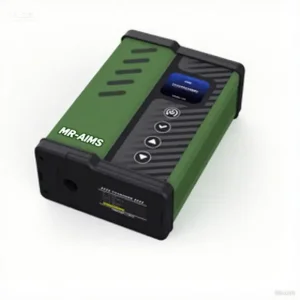
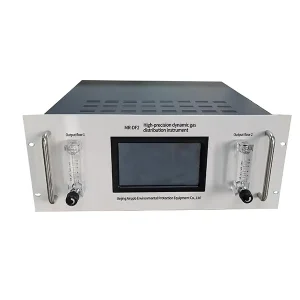
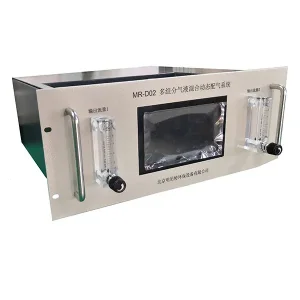
As we look toward the future, the integration of Dynamic Gas Distribution instruments like the MR-DF series is essential for laboratory calibration. Accuracy is not a one-time setup; it requires constant verification. Our high-precision distribution systems allow users to create exact gas concentrations to calibrate their sensor fleets, ensuring that every detector in the field is performing at its peak theoretical capacity.