 Airppb
Airppb
Airppb
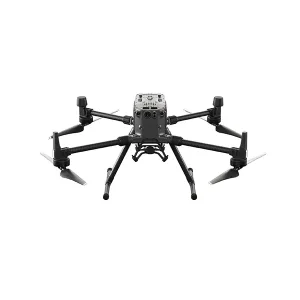
The global environmental protection industry is undergoing a paradigm shift, transitioning from localized, stationary sensing to mobile, wide-area surveillance. At the heart of this revolution is the Toxic Gas Drone Fourier Telemetry system. This technology combines the mobility of Unmanned Aerial Vehicles (UAVs) with the unparalleled analytical power of Fourier Transform Infrared (FTIR) spectroscopy. As a leading manufacturer and brand in this niche, we are seeing an unprecedented surge in demand for systems that can detect, identify, and quantify hazardous gases from a distance without putting human lives at risk.
In regions like North America and the European Union, regulatory frameworks for industrial emissions have become increasingly stringent. Companies are no longer just monitoring for compliance; they are utilizing drone-based FTIR telemetry for predictive maintenance and rapid leak detection in massive petrochemical complexes. Meanwhile, in emerging markets across Southeast Asia and the Middle East, this technology is being deployed to safeguard urban populations from industrial accidents and to monitor volcanic activity or large-scale agricultural emissions.
Fourier Telemetry allows for "standoff" detection, meaning gases can be identified from kilometers away. This is crucial for early warning systems in high-risk chemical parks.
By mounting FTIR sensors on drones, we eliminate the blind spots of fixed sensors, providing a 3D view of gas plume migration and concentration gradients.
Unlike traditional electrochemical sensors, a single FTIR scan can simultaneously detect over 400 types of organic and inorganic gases with high spectral resolution.
The industry is moving toward Artificial Intelligence and Machine Learning (AI/ML) integration. Modern Fourier Telemetry systems are now equipped with onboard processing units that use AI to automatically filter out background noise and atmospheric interference, providing real-time "fingerprint" recognition of toxic gases. This reduces the burden on human operators and increases the speed of emergency response.
Another significant trend is Miniaturization. Historically, FTIR spectrometers were bulky laboratory instruments. Our R&D as a premier manufacturer focuses on reducing the weight and power consumption of these sensors to allow for longer flight times and compatibility with smaller, more agile drone platforms. The fusion of hyperspectral imaging with FTIR telemetry is also becoming a reality, allowing users to "see" the gas cloud in a color-coded thermal overlay.
Gases Detectable
Detection Range
Response Time
Autonomous Monitoring
Global procurement officers from government environmental agencies, military defense sectors, and multinational oil and gas firms share a common set of requirements: Reliability, Accuracy, and Cost-Effectiveness. In harsh environments—ranging from the humid tropics of Brazil to the freezing oil fields of Siberia—telemetry equipment must be ruggedized and easy to calibrate.
As a China-based high-tech factory, Minnit offers a unique value proposition that Western manufacturers often struggle to match:
We control everything from optical component fabrication to software algorithm development, ensuring seamless integration and strict quality control at every stage.
Our proximity to the world's largest electronics and drone ecosystem allows us to prototype and deploy new features in months, rather than years.
By leveraging China's optimized supply chain, we provide enterprise-grade FTIR telemetry solutions at a fraction of the cost of traditional laboratory providers.
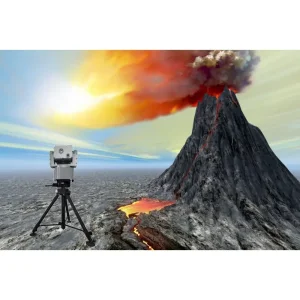
Local Application Scenario: In a recent project in the Middle East, our MR-ACT system was used to monitor volcanic SO2 emissions from a safe distance of 4km. The drone-mounted system provided real-time data to local geologists, allowing them to map gas concentrations without entering the danger zone. Similar deployments have been successful in Russian industrial zones for monitoring fugitive methane emissions from aging pipelines.
Fourier Transform Infrared (FTIR) technology is the "Gold Standard" for gas identification. Unlike laser-based systems (TDLAS) which usually detect only one specific gas, FTIR captures the entire mid-infrared spectrum. Each molecule has a unique "vibrational fingerprint." Our proprietary algorithms compare the collected spectral data against a comprehensive library of thousands of chemical signatures in milliseconds.
As a manufacturer, we focus on the Interferometer—the heart of the system. Our patented "Corner Cube" design ensures that even during the high-vibration environment of a drone flight, the optical path remains perfectly aligned, ensuring data integrity that meets international environmental standards (EPA/ISO).
Minnit is a national high-tech enterprise focusing on the research and development and industrialized innovative application of precision gas detection instruments. The company uses technological innovation to realize on-site, automated and intelligent analysis, detection and monitoring, and is committed to becoming the world's leading manufacturer of scientific instruments. It has mastered relatively complete gas analysis and detection technologies such as electrochemistry, PID, and spectroscopy, and developed laboratory Analysis, on-site analysis (portable, online, mobile), automated analysis and a series of technologically leading product portfolios provide global users with comprehensive and professional solutions in the fields of advanced industry, ecological environment emergency safety and other fields.
In the face of global climate change and the ever-present risks of industrial expansion, the need for sophisticated monitoring tools has never been greater. Minnit, as a specialized Toxic Gas Drone Fourier Telemetry Manufacturer, is committed to pushing the boundaries of what is possible. Our mission is to provide instruments that are not just "sensors" but "intelligent eyes" capable of deciphering the chemical composition of our atmosphere from above.
Whether it's for emergency response after a chemical spill, routine inspection of gas pipelines, or academic research into atmospheric chemistry, our drone-based FTIR solutions provide the precision, reliability, and authoritativeness required by today's environmental professionals. Join the ranks of global leaders who trust our technology to protect both their assets and the planet.