 Airppb
Airppb
Airppb
Leading the industry with high-sensitivity gas telemetry solutions
Bridging the Gap Between Aerial Mobility and Molecular Analysis
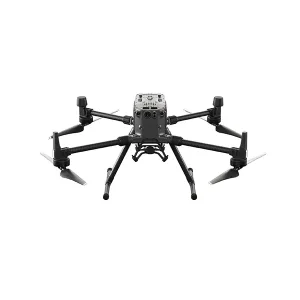
In the contemporary defense and industrial landscape, the fusion of Unmanned Aerial Vehicles (UAVs) and gas telemetry systems represents a paradigm shift in situational awareness. Military UAV gas telemetry is no longer just about detecting hazardous leaks; it is about real-time, standoff chemical reconnaissance and battlefield intelligence. Globally, the demand for these systems has surged as nations prioritize "Zero Casualty" protocols in chemical, biological, radiological, and nuclear (CBRN) defense.
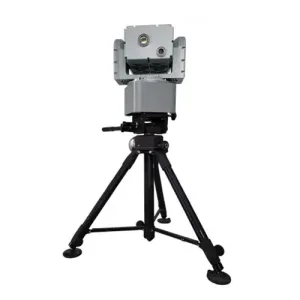
From the arid landscapes of the Middle East to the industrial corridors of Europe, UAVs equipped with hyperspectral imaging and Fourier Transform Infrared (FTIR) telemetering are becoming the standard for 24/7 monitoring. These systems allow operators to visualize invisible gas clouds from kilometers away, providing a tactical advantage that traditional point-source detectors cannot match.
For military organizations, the ability to deploy a drone to scout a potentially contaminated "hot zone" before sending in personnel is invaluable. Advanced manufacturers are now integrating Ion Mobility Spectrometry (IMS) and Photoionization Detection (PID) into lightweight UAV payloads. These technologies facilitate the identification of chemical warfare agents (CWAs) and toxic industrial chemicals (TICs) with laboratory-grade precision in flight.
Current rankings in the telemetry industry emphasize not just the sensitivity of the sensors, but the robustness of the data link and the ability to integrate with broader C4ISR systems. This ensures that gas data is not just collected, but actionable in real-time for commanders on the ground.
How AI and High-Precision Sensing are Reshaping Industries
Integration of AI-driven imaging systems in Russia and Northern Europe for early warning of gas leaks in harsh, sub-zero pipelines where human inspection is impossible.
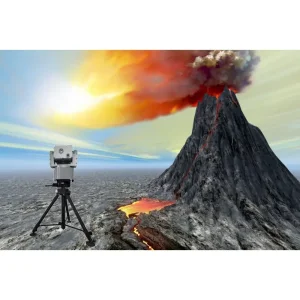
Monitoring SO2 and CO2 levels in active volcanic regions like the Middle East and Southeast Asia using long-range telemetry to predict eruptions and protect local populations.
Rapid deployment of UAV-mounted IMS identifiers by emergency teams globally to categorize unknown chemical threats within minutes of an incident.
Procurement officers in the petroleum and defense sectors are moving away from monolithic, heavy sensing platforms. The current trend favors modular, high-precision payloads that can be swapped between different UAV platforms. Key requirements include:
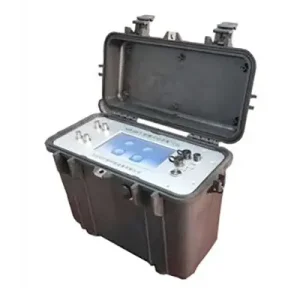
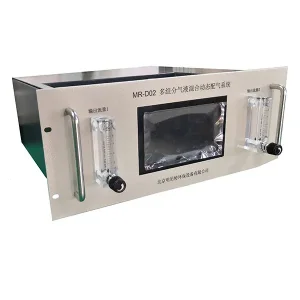
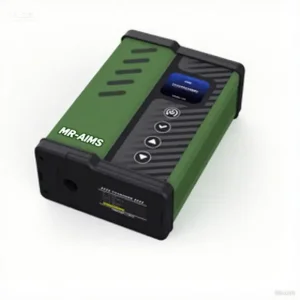
Minnit is a national high-tech enterprise focusing on the research and development and industrialized innovative application of precision gas detection instruments. The company uses technological innovation to realize on-site, automated and intelligent analysis, detection and monitoring, and is committed to becoming the world's leading manufacturer of scientific instruments.
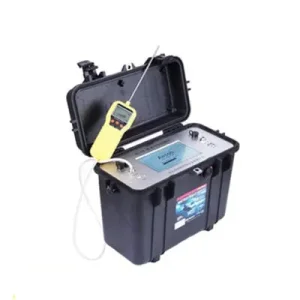
It has mastered relatively complete gas analysis and detection technologies such as electrochemistry, PID, and spectroscopy, and developed laboratory Analysis, on-site analysis (portable, online, mobile), automated analysis and a series of technologically leading product portfolios provide global users with comprehensive and professional solutions in the fields of advanced industry, ecological environment emergency safety and other fields.
Supply Chain Integration: Located in the heart of the world's manufacturing hub, we leverage an unparalleled component ecosystem to deliver high-tech instruments at competitive speeds.
R&D Agility: Our engineering team can customize telemetry protocols and sensor arrays within weeks, matching the rapid evolution of UAV hardware.
Stringent Quality Standards: Every unit undergoes rigorous military-grade vibration and thermal testing to ensure reliability in the field.
Global Support: With a proven track record in the Middle East, Russia, and Southeast Asia, we understand localized regulatory and technical requirements.
Criteria that define the world's top scientific instrument brands
The ability to distinguish between similar gas molecules (e.g., Ethane vs. Methane) is the hallmark of a top-tier manufacturer. Our FTIR systems provide high spectral resolution that sets us apart in international rankings.
Top-ranked telemetry systems must be "drone-agnostic," capable of mounting on DJI, Autel, or custom military airframes using standard M600 or SkyPort interfaces.
Modern users demand more than just raw data; they need heat maps, leak source localization algorithms, and automated plume modeling provided by integrated software suites.
Adherence to ATEX, IECEx, and military MIL-STD-810G standards is non-negotiable for high-end procurement cycles in the defense and petroleum sectors.
Explore our comprehensive range of gas detection and analysis systems