 Airppb
Airppb
Airppb
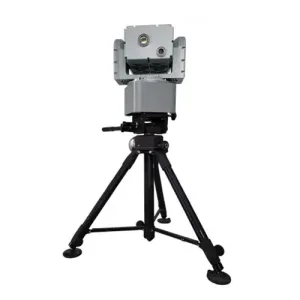
The global petroleum and petrochemical industry is undergoing a paradigm shift in safety and environmental monitoring. Traditional point-source gas detectors, while reliable for localized leaks, are increasingly insufficient for the vast, complex infrastructures of modern refineries, tank farms, and cross-country pipelines. This has led to the rise of the Volatile Gas Long-Distance Telemetry Imager, a sophisticated tool that combines infrared spectroscopy with high-definition imaging to "see" invisible gas clouds from kilometers away.
As regulatory bodies like the EPA (USA) and the European Environment Agency tighten VOC (Volatile Organic Compound) emission standards, the demand for remote sensing technology has surged. These imagers are no longer just "emergency tools"; they are integral to 24/7 automated monitoring systems that prevent catastrophic explosions and reduce the carbon footprint of global energy giants.
The industry is moving toward Hyperspectral Imaging and AI-driven quantification. Modern Volatile Gas Long-Distance Telemetry Imagers are now capable of not only detecting the presence of a gas but also identifying its chemical composition and estimating the leak rate in real-time. Key trends include:
Integration of neural networks to filter out environmental interference (like steam or dust) and accurately identify gas plumes with zero false alarms.
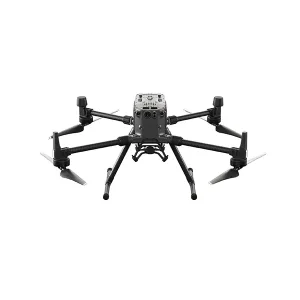
Telemetry imagers are being mounted on UAVs (Drones), robotic dogs, and fixed-position pan-tilt units for comprehensive site coverage.
Real-time data transmission to centralized command centers, allowing for global fleet management of gas safety across multiple continents.
Procurement departments in the Middle East, Russia, and North America prioritize reliability in extreme environments. Whether it is the scorching heat of a Saudi Arabian desert or the sub-zero temperatures of a Siberian gas field, telemetry imagers must maintain precision.
As a premier Chinese high-tech enterprise, we offer a unique blend of innovation, speed, and cost-efficiency that Western competitors often struggle to match. Our advantages include:
We have mastered complete gas analysis technologies, including electrochemistry, PID, and Fourier Transform Infrared (FTIR) spectroscopy.
Located in the heart of the world's manufacturing hub, we ensure rapid prototyping and large-scale production with shorter lead times.
We provide tailored solutions for specific gas species and environmental conditions, ensuring the equipment fits your local regulatory needs.
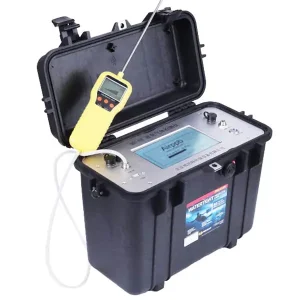
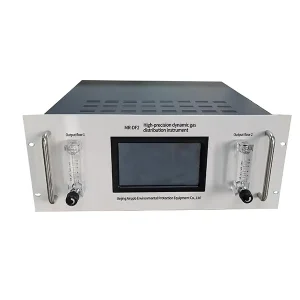
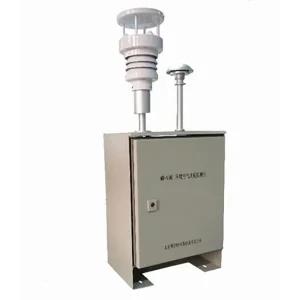
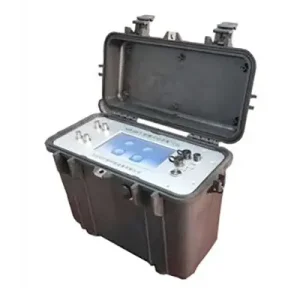
Minnit is a national high-tech enterprise focusing on the research and development and industrialized innovative application of precision gas detection instruments. The company uses technological innovation to realize on-site, automated and intelligent analysis, detection and monitoring, and is committed to becoming the world's leading manufacturer of scientific instruments.
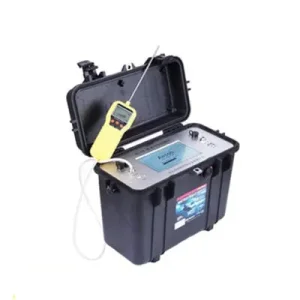
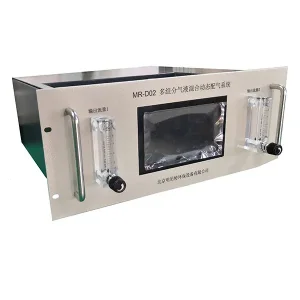
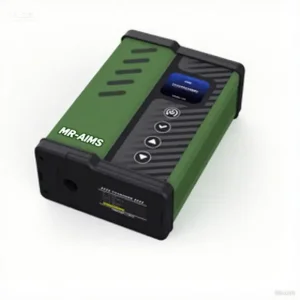
It has mastered relatively complete gas analysis and detection technologies such as electrochemistry, PID, and spectroscopy, and developed laboratory Analysis, on-site analysis (portable, online, mobile), automated analysis and a series of technologically leading product portfolios provide global users with comprehensive and professional solutions in the fields of advanced industry, ecological environment emergency safety and other fields.
The core of our Volatile Gas Long-Distance Telemetry Imager lies in its ability to detect the specific infrared absorption "fingerprint" of hydrocarbon gases. Unlike traditional cameras, our systems utilize cooled or uncooled thermal detectors optimized for the 7-14μm or 3-5μm spectral bands. When a gas leak occurs, the imager detects the temperature differential or the absorption of background IR radiation by the gas plume, rendering it visible as a "smoke-like" image on the screen.
This technology is vital for the Petroleum and Petrochemical Industry because it allows operators to scan hundreds of potential leak points (valves, flanges, seals) in a single sweep. In the global ranking of gas detection manufacturers, those who can provide high-resolution imaging combined with quantitative data (concentration in ppm-m) are leading the market. Minnit's commitment to R&D ensures that our MR-ACT and MR-FAT series remain at the forefront of this technological curve.
Furthermore, our systems are designed for interoperability. They can be integrated into existing SCADA systems or Distributed Control Systems (DCS), providing an extra layer of safety that traditional sensors cannot offer. By providing visual evidence of a leak, we reduce the time-to-action, potentially saving millions in lost product and preventing environmental fines.