 Airppb
Airppb
Airppb
Advanced instrumentation tailored for Spanish civil defense, military units (UME), and industrial hazmat responders.
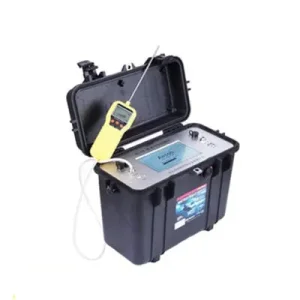
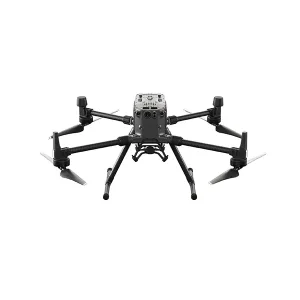
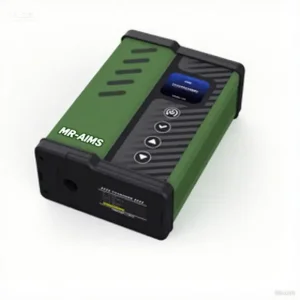
Spain stands as a pivotal hub for industrial activity in Southern Europe, with massive petrochemical complexes in Tarragona, Huelva, and Puertollano. This heavy industrial concentration, coupled with strict European Union safety regulations (such as the Seveso III Directive), has driven a sophisticated demand for "Emergency" and "Safety" manufacturers.
Currently, the Spanish market is shifting from reactive safety measures to proactive, intelligent monitoring. The National Civil Protection System (Sistema Nacional de Protección Civil) and specialized units like the Military Emergencies Unit (UME) require high-precision tools that can operate in diverse terrains—from the humid northern coasts of Galicia to the arid landscapes of Andalusia.
Meeting UNE-EN standards for explosion-proof and environmental monitoring equipment across all 17 Autonomous Communities.
Integrating IoT and AI to provide Spanish emergency commanders with real-time data overlays on digital maps.
Establishing authority through technological innovation and on-site application expertise.
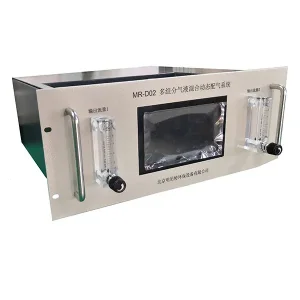
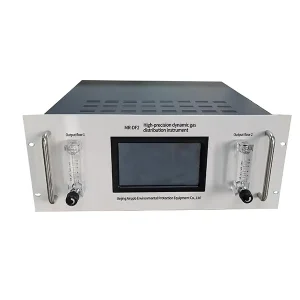
Minnit is a national high-tech enterprise focusing on the research and development and industrialized innovative application of precision gas detection instruments. The company uses technological innovation to realize on-site, automated and intelligent analysis, detection and monitoring, and is committed to becoming the world's leading manufacturer of scientific instruments. It has mastered relatively complete gas analysis and detection technologies such as electrochemistry, PID, and spectroscopy, and developed laboratory Analysis, on-site analysis (portable, online, mobile), automated analysis and a series of technologically leading product portfolios provide global users with comprehensive and professional solutions in the fields of advanced industry, ecological environment emergency safety and other fields.
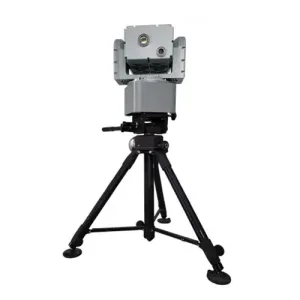
We utilize Fourier Transform Infrared (FTIR) technology to identify complex chemical clouds from distances up to 5km, a critical tool for Madrid's urban emergency teams.
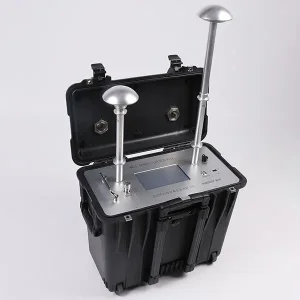
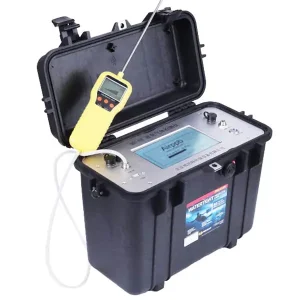
Our portable units are designed for the "Golden Hour" of emergency response, ensuring Spanish firefighters (Bomberos) can assess toxic risks in under 60 seconds.
With thousands of successful deployments in petrochemical sites across Europe, our instruments are trusted for their durability in harsh Mediterranean saline environments.
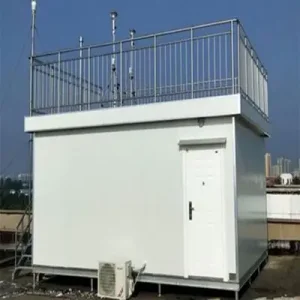
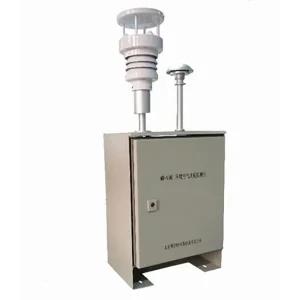
Continuous monitoring of VOCs and toxic gases in Europe’s largest chemical cluster. Our MR-A(S) automatic stations provide fence-line monitoring to ensure community safety and regulatory adherence.
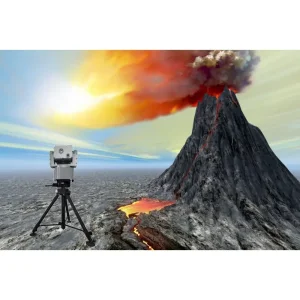
Following the La Palma eruption, the need for remote volcanic gas telemetry (MR-ACT) has skyrocketed. We provide systems that monitor SO2 and CO2 levels without risking personnel.
Integrating our micro-air stations into "Low Emission Zone" (ZBE) initiatives to provide real-time particulate and gas data for city planners and health officials.
How digital transformation is reshaping the ranking of safety manufacturers in the region.
The "Industry 4.0" wave is hitting the Spanish safety sector hard. We are seeing a move toward Hyper-Connected Safety Ecosystems. No longer is a gas detector a standalone tool; it is now a node in a massive data network. In Spain, the ranking of manufacturers is now determined by their ability to provide interoperable data that can be ingested by 112 Emergency Centers.
Key trends include:
Explore our full range of high-precision instruments ranked #1 for reliability and innovation.